





What's Happening?
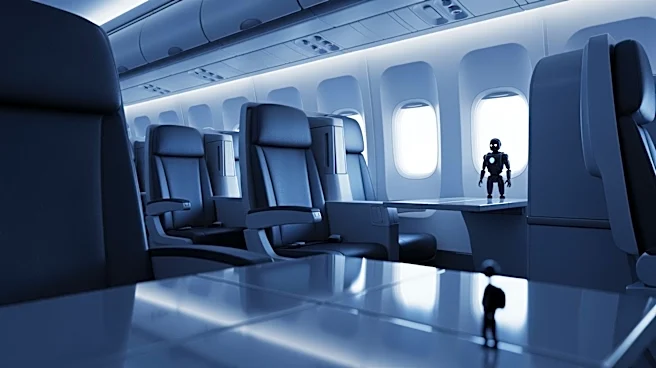
Southwest Airlines has updated its travel policy to prohibit humanoid robots from being transported in the cabin or as checked luggage. This decision follows an incident where a humanoid robot named Stewie, owned by tech entrepreneur Aaron Mehdizadeh,
was given a seat on a flight from Las Vegas to Dallas. The airline's policy change is primarily due to safety concerns associated with lithium-ion batteries, which are known to pose fire risks on aircraft. While smaller robotic toys that fit within carry-on luggage and comply with battery restrictions are still permitted, larger humanoid robots are now banned. The incident gained attention when Stewie, a 3.5-foot robot, became a temporary celebrity on the flight, entertaining passengers and sparking a range of reactions online.
Why It's Important?
The ban on humanoid robots by Southwest Airlines highlights the ongoing challenges airlines face in balancing technological advancements with safety regulations. Lithium-ion batteries, commonly used in many electronic devices, have been linked to fire hazards, prompting airlines to enforce strict guidelines. This policy change could impact tech companies and entrepreneurs who utilize robots for various purposes, including events and demonstrations. It underscores the need for clear regulations as technology continues to evolve and integrate into everyday life. The decision also reflects broader safety concerns in the aviation industry, where passenger and crew safety remains a top priority.
What's Next?
As airlines continue to navigate the integration of new technologies, further policy updates and safety guidelines may be developed to address emerging risks. Stakeholders, including tech companies and regulatory bodies, might engage in discussions to find a balance between innovation and safety. The aviation industry could see increased collaboration with tech firms to develop safer battery technologies or alternative solutions for transporting advanced electronic devices. Additionally, public reactions and feedback may influence future policy adjustments as airlines strive to accommodate technological advancements while ensuring passenger safety.