







What's Happening?
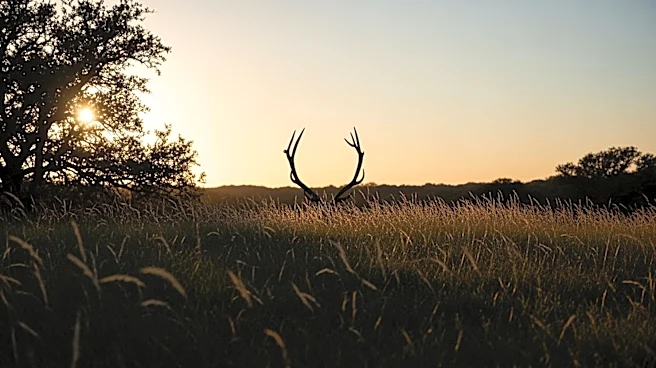
In South Austin, a local resident named Darren Smith reported seeing an elk while driving on South MoPac Expressway in 2019. Initially met with skepticism, Smith's claim gained traction after an elk crossing sign appeared on State Highway 45 Southwest
toll road. This sign, along with anecdotal evidence from local forums and sightings, suggested the presence of elk in the area. The Texas Disposal Systems Exotic Game Ranch, known for housing exotic animals, is believed to be a potential source of these elk. The ranch, located near a landfill in Southeast Austin, keeps various exotic species, including elk, which are sometimes seen roaming freely due to breaches in fencing. This has led to discussions about the adaptability and survival of elk in the Austin area, traditionally not known for such wildlife.
Why It's Important?
The presence of elk in South Austin highlights the broader issue of wildlife management and the impact of exotic game ranches in Texas. These ranches, which often house non-native species for hunting purposes, can inadvertently contribute to local ecosystems when animals escape. The adaptability of elk to different climates and environments raises questions about their potential impact on native species and habitats. Additionally, the sightings have sparked community interest and debate, reflecting a growing awareness and concern for wildlife conservation and management practices in urban and suburban areas. This situation underscores the need for effective policies to manage exotic species and their interactions with local ecosystems.
What's Next?
As sightings continue, local authorities and wildlife experts may need to assess the impact of escaped elk on the environment and consider measures to prevent further escapes. This could involve strengthening fencing at exotic game ranches and monitoring wildlife populations in the area. Community engagement and education about local wildlife could also play a role in addressing public concerns and fostering coexistence with these animals. The situation may prompt discussions on regulatory measures for exotic game ranches and their responsibilities in preventing animal escapes.
Beyond the Headlines
The elk sightings in Austin could lead to a reevaluation of how urban areas coexist with wildlife, particularly in regions where exotic species are introduced. This situation may also highlight ethical considerations regarding the keeping of exotic animals for hunting and entertainment purposes. The adaptability of elk to urban environments could serve as a case study for understanding the dynamics of wildlife adaptation and the potential for human-wildlife conflict in growing cities. Long-term, this could influence conservation strategies and urban planning to better accommodate wildlife.