






What's Happening?
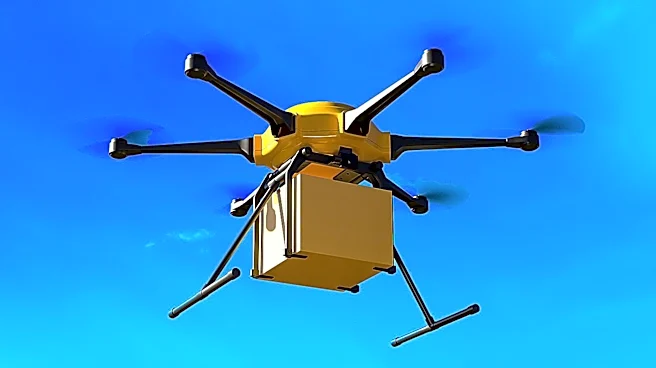
A British-made Windracers ULTRA cargo drone, owned by Purdue University, has successfully completed the first beyond visual line of sight (BVLOS) flight in the newly established Indiana Drone Corridor. This milestone, achieved on October 29, marks a significant
advancement for uncrewed aviation testing in the U.S. The drone, with a 33-foot wingspan and an aluminum airframe, utilizes a proprietary flight control system for autonomous operation. Its three-bay cargo drop configuration can carry over 330 pounds (150kg) of payload, allowing for in-flight supply releases. Purdue University is collaborating with Windracers through its Center on AI for Digital, Autonomous and Augmented Aviation (AIDA3) initiative to enhance the safety and efficiency of autonomous air systems. The university plans to use the aircraft for testing applications relevant to Indiana, particularly the delivery of emergency supplies via parachute to communities affected by seasonal flooding. The Indiana Drone Corridor, managed by the Indiana Economic Development Corporation and Applied Research Institute (ARI), was designated by the U.S. Department of Transportation and Federal Aviation Administration (FAA) as one of two new UAS test sites in January 2026.
Why It's Important?
This successful flight in Indiana is a crucial step in advancing Advanced Air Mobility (AAM) and autonomous drone operations within the United States. The ability to deliver emergency supplies autonomously by parachute has significant implications for disaster relief and humanitarian assistance, especially in areas difficult to access by traditional means, such as those impacted by seasonal flooding in Indiana. This technology can enhance emergency response capabilities, potentially saving lives and reducing suffering by ensuring timely delivery of critical aid. Furthermore, the development and testing within the Indiana Drone Corridor are expected to foster innovation and create economic opportunities in the Midwest by connecting manufacturing capabilities with flight testing and research. This initiative aims to improve the lives of Hoosiers by reducing road congestion, optimizing medical delivery services, and strengthening America's defense and industrial base through the development of new aviation technologies.
What's Next?
Purdue University will continue to utilize the Windracers ULTRA for testing and evaluating applications specific to Indiana, focusing on emergency supply delivery. The Indiana Drone Corridor will serve as a dedicated space for industry and academia to conduct large-scale research and development in a real-world environment, accelerating the future of AAM. The collaboration between Purdue University, Windracers, the Indiana Economic Development Corporation, and ARI is expected to lead to further advancements in autonomous drone technology and its practical applications. This development also sets a precedent for other regions in the U.S. to establish similar test sites, potentially expanding the use of autonomous heavy-lift air mobility operations nationwide. The long-term goal is to integrate these technologies into various sectors, including logistics, defense, and humanitarian aid, to improve efficiency and response times.
Beyond the Headlines
The successful autonomous drone flight in Indiana highlights a broader shift towards integrating uncrewed aerial systems into critical infrastructure and emergency services. This development raises important considerations regarding regulatory frameworks for BVLOS operations, airspace management, and public acceptance of autonomous technologies. The ethical implications of autonomous decision-making in emergency scenarios, data privacy, and cybersecurity for drone systems will also become increasingly relevant. Moreover, the focus on humanitarian assistance and disaster relief applications underscores the potential for technology to address pressing societal challenges, but also necessitates robust testing and validation to ensure reliability and safety. The project could also influence educational curricula, fostering a new generation of engineers and technicians skilled in autonomous systems and aviation.