



What's Happening?
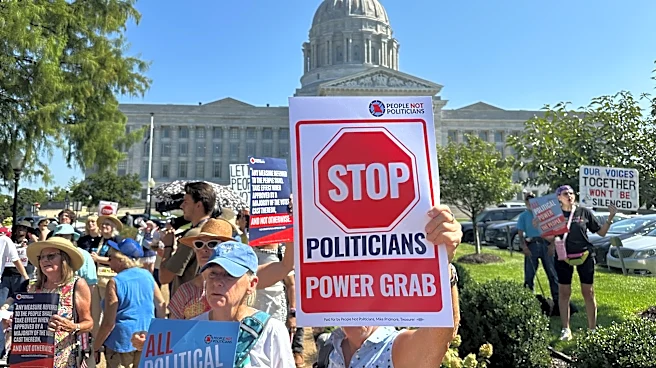
Recent rulings by the Missouri Supreme Court and the U.S. Supreme Court have mandated the use of the state's previous congressional map, effectively blocking a Republican-drawn redistricting plan. This decision has significant implications for Missouri's
2nd Congressional District, currently represented by Republican Ann Wagner. The district, which encompasses suburban St. Louis, is now considered the state's only competitive district. The original Republican gerrymander aimed to unseat Democratic Representative Emanuel Cleaver and strengthen Representative Wagner's position. However, with the old map reinstated, Wagner's district is expected to attract increased scrutiny and campaign spending, making her re-election bid more challenging. Missouri Democrats are optimistic about retaining their two House seats and see an opportunity to contest this now-competitive Republican-leaning district, especially in a political climate that often favors the party out of power.
Why It's Important?
The reclassification of Missouri's 2nd Congressional District as competitive is crucial for both national and state-level politics. For Republicans, it means defending a seat that was previously considered safer, potentially diverting resources from other races. For Democrats, it presents a prime opportunity to gain a seat in the U.S. House of Representatives, which could be pivotal in a closely divided Congress. The increased campaign spending and media attention in this district will highlight local issues and voter sentiment in suburban areas, which are often bellwethers for broader political trends. The outcome of this race could influence the balance of power in Congress and serve as an indicator of the national political mood leading up to future elections. It also underscores the significant impact of judicial decisions on electoral landscapes and the ongoing battle over gerrymandering.
What's Next?
With the district now deemed competitive, the upcoming election cycle for Missouri's 2nd Congressional District is expected to be highly contested. Both Republican Ann Wagner and her Democratic challenger, Fred Wellman, will likely intensify their campaign efforts, focusing on voter outreach and fundraising. National party organizations are also expected to invest heavily in the district, providing financial and strategic support to their respective candidates. Voters in suburban St. Louis can anticipate a surge in political advertising, debates, and candidate appearances. The race will be closely watched as a potential swing district, with its outcome offering insights into voter preferences in key suburban demographics and potentially influencing future redistricting debates across the country.
Beyond the Headlines
The situation in Missouri's 2nd Congressional District reflects a broader national trend where judicial intervention in redistricting processes can dramatically alter electoral competitiveness. This case highlights the ongoing tension between partisan efforts to draw favorable district lines and legal challenges aimed at ensuring fairer representation. The increased competitiveness of this district could lead to more moderate political discourse as candidates strive to appeal to a wider range of voters, rather than solely focusing on their party's base. Furthermore, it underscores the power of state supreme courts in shaping federal elections, demonstrating how state-level legal battles can have national political ramifications. The outcome will not only determine who represents the district but also serve as a case study in the effectiveness of judicial checks on legislative gerrymandering.