


What's Happening?
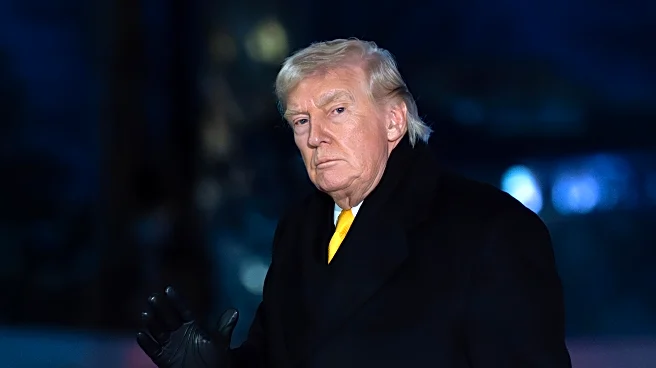
A federal judge has demanded an explanation from the Department of Justice regarding Lindsey Halligan's continued use of the title 'U.S. attorney' despite a previous court ruling that deemed her appointment unlawful. Halligan, appointed by President Trump
as the acting U.S. attorney for the Eastern District of Virginia, was found to be in violation of the Appointments Clause of the U.S. Constitution. This ruling came after Halligan secured indictments against former FBI Director James Comey and New York Attorney General Letitia James, which were later dismissed due to her unlawful appointment. The controversy arises from Halligan's representation as U.S. attorney on an indictment, despite a binding court order from Senior U.S. District Judge Cameron McGowan Currie, which stated her appointment violated federal law. U.S. District Judge David Novak has ordered the DOJ to explain Halligan's identification as U.S. attorney within seven days.
Why It's Important?
This legal dispute highlights significant issues regarding the appointment process for U.S. attorneys and the constitutional requirements that govern such appointments. The case underscores the importance of adhering to the Appointments Clause, which is designed to ensure that key legal positions are filled through a process that includes Senate confirmation. The outcome of this case could have broader implications for the legitimacy of legal actions taken by improperly appointed officials and may influence future appointments. It also raises questions about the checks and balances between the executive branch and the judiciary, particularly in the context of appointments made by the President without Senate approval.
What's Next?
The Department of Justice is expected to respond to Judge Novak's order within the specified timeframe. Depending on the DOJ's explanation, further legal proceedings may ensue to address the validity of Halligan's actions while serving under the disputed title. The case may also prompt a review of other similar appointments and could lead to changes in how interim U.S. attorneys are appointed in the future. Stakeholders, including legal experts and political leaders, will likely monitor the situation closely, as it could set a precedent for handling similar cases.