



What's Happening?
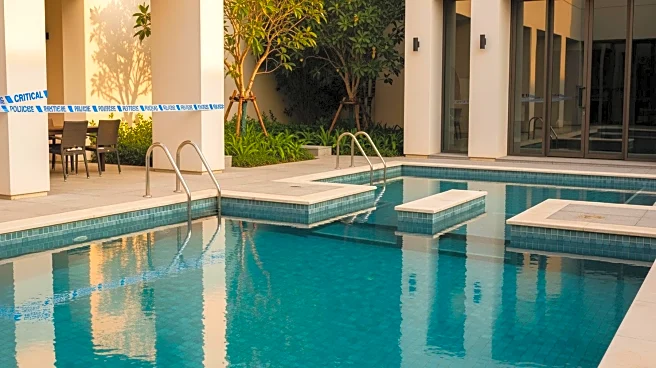
In Efrat, a community located in the Judean Hills, a new swimming pool has been introduced featuring a mechitza, a mechanical divider that allows men and women to swim separately at the same time. This innovation addresses the needs of Orthodox Jews who
prefer separate swimming due to religious beliefs. The pool, which took a decade and NIS 40 million ($13 million) to construct, is a unique solution that combines modernity with Jewish law. The funding for the pool came from various sources, including the Israeli lottery, government allocations, and private donations. The pool's design and scheduling have received mixed reactions from the community, with some praising the solution for separate swimming and others criticizing the scheduling and layout for not being family-friendly.
Why It's Important?
The introduction of the mechitza pool in Efrat is significant as it represents a novel approach to accommodating religious practices within modern infrastructure. This development could serve as a model for other communities seeking to balance religious observance with contemporary lifestyle needs. The pool's design allows for inclusivity, providing a space where religious individuals can adhere to their beliefs without compromising on modern amenities. However, the mixed reactions highlight the challenges in creating facilities that meet diverse community needs, emphasizing the importance of thoughtful planning and community engagement in public projects.
What's Next?
The Efrat pool's model may inspire similar projects in other communities, particularly those with significant Orthodox Jewish populations. The community's feedback could lead to adjustments in scheduling and design to better accommodate families and ensure safety. The success of this project could encourage further innovations in public facilities that respect religious practices while promoting inclusivity. Stakeholders may consider additional features, such as extended hours or outdoor pools, to enhance the pool's accessibility and appeal.
Beyond the Headlines
The Efrat pool's design raises broader questions about how public spaces can be designed to respect religious practices while fostering community cohesion. The project highlights the potential for creative solutions in urban planning that address the needs of diverse populations. It also underscores the importance of balancing tradition with modernity, a challenge faced by many communities worldwide. The pool's success could influence future developments in religiously diverse areas, promoting a model of inclusivity and respect for cultural practices.