


What's Happening?
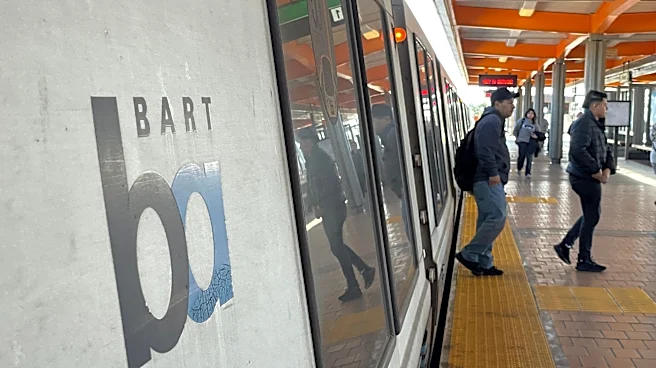
The San Francisco Bay Area's public transit system, Bay Area Rapid Transit (BART), is facing a severe financial crisis that could lead to significant service reductions and closures as early as 2027. The system, which connects 50 stations across five
counties, could be forced to close up to 15 stations, reduce service frequency by 63%, increase fares and parking fees by 30%, and end all service by 9 p.m. This potential 'death spiral' is attributed to a drastic decline in ridership since the pandemic, which has severely impacted BART's self-sustaining funding model, traditionally relying on passenger fares for 60-70% of its operating revenue. The agency, despite recent efforts to upgrade safety and improve customer satisfaction, has struggled to recover pre-pandemic ridership levels due to the region's shift towards remote and hybrid work.
Why It's Important?
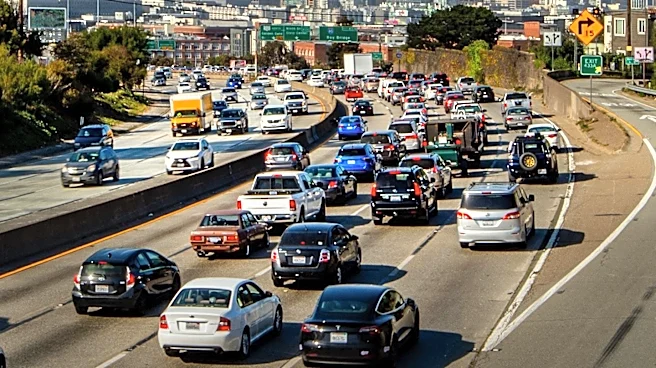
The potential collapse of BART would have profound economic, social, and environmental consequences for the San Francisco Bay Area. The region's economy, particularly its technology sector, heavily relies on BART to transport its workforce, as highlighted by Jeffrey Tumlin, former head of the San Francisco Municipal Transportation Agency. A significant reduction or cessation of BART services would lead to a massive increase in traffic congestion on already gridlocked freeways and bridges, doubling traffic delays during peak hours, according to a report by the San Francisco Bay Area Planning and Urban Research Association (Spur). This would not only impact commuters' daily lives but also increase transportation costs for residents, with an estimated additional $3,280 per year in expenses for those forced to switch to driving. Low-income workers and individuals with disabilities, who often have limited alternative transportation options, would be disproportionately affected, exacerbating existing inequalities.
What's Next?
The future of BART hinges on the approval of two ballot measures in November: a 0.5% sales tax across four Bay Area counties and a 1% sales tax in San Francisco. These measures aim to generate approximately $1 billion annually for 14 years to fund the region's four largest transit operators. Without voter approval, the drastic service cuts and closures are likely to proceed. Advocacy groups and individuals, like software engineer Anki, are actively campaigning to persuade voters of the critical need for these measures, emphasizing the dire consequences of inaction. The outcome of these votes will determine whether the Bay Area's public transit system can avert a crisis and continue to serve its millions of residents, or if it will enter a period of severe decline with widespread repercussions for the region's infrastructure and quality of life.
Beyond the Headlines
The BART crisis illuminates a broader national challenge faced by public transportation systems in the post-pandemic era, particularly in regions with high rates of remote work. It raises fundamental questions about the long-term viability of traditional public transit funding models and the need for innovative solutions to adapt to changing commuter patterns. The situation also highlights the intricate relationship between public infrastructure, economic prosperity, and social equity. The potential for increased traffic and pollution underscores the environmental implications of a failing transit system, pushing more people into private vehicles. Furthermore, the debate over funding reflects a societal choice about the value placed on accessible, efficient public transport as a cornerstone of urban life and economic competitiveness, especially in a globally influential metropolis like the Bay Area.