





What's Happening?
A New York man, Mohamed Diawara, 25, was arrested at Washington Dulles International Airport after U.S. Customs and Border Protection (CBP) officers discovered nearly 400 pounds of khat in his checked luggage. Diawara arrived on a flight from Paris and was referred
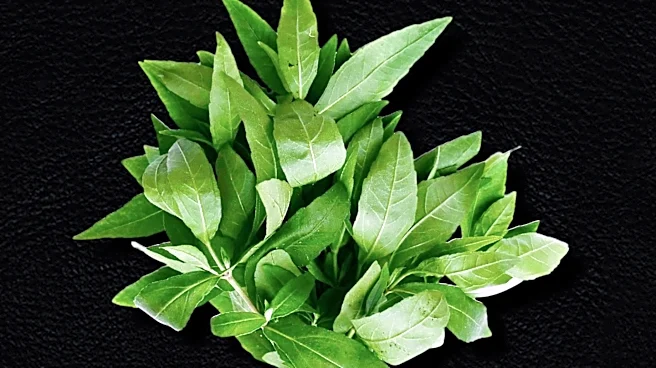
for a secondary inspection, during which officers found a commercial quantity of a dried organic substance across eight checked suitcases. Field testing confirmed the substance to be khat, a plant containing controlled stimulants. The seized khat weighed 367 pounds, 9 ounces, and had an estimated street value of approximately $44,000. Metropolitan Washington Airports Authority Police charged Diawara with felony possession with intent to distribute and transporting a controlled substance into Virginia. This incident is part of an increasing trend of khat smuggling attempts observed by CBP at various airports, including recent seizures at Baltimore/Washington International Thurgood Marshall Airport.
Why It's Important?
This significant seizure highlights the ongoing efforts by U.S. Customs and Border Protection to interdict illegal controlled substances entering the country. The increasing attempts to smuggle khat, as noted by CBP, indicate a persistent demand for the substance within the U.S. and the profitability of its illicit trade. Khat, known for its stimulant effects, is illegal in the United States and poses various health risks to users. The arrest and charges against Mohamed Diawara underscore the legal consequences for individuals involved in drug trafficking. For law enforcement and public health agencies, such seizures are crucial in disrupting supply chains and mitigating the potential harm associated with controlled substance abuse. The incident also points to the challenges faced by airport security in detecting concealed contraband, necessitating advanced screening techniques and vigilant personnel to safeguard national borders.
What's Next?
Mohamed Diawara faces felony charges for possession with intent to distribute and transporting a controlled substance into Virginia. The legal process will involve court proceedings to determine his guilt and appropriate sentencing. U.S. Customs and Border Protection will likely continue to enhance its screening protocols and intelligence gathering to combat the rising trend of khat smuggling. This may include increased vigilance at international airports, particularly on flights originating from regions known for khat cultivation, such as East Africa and the Arabian Peninsula. Law enforcement agencies will also focus on identifying and dismantling the networks involved in the distribution of khat within the United States. Public health initiatives may also be reinforced to educate communities about the dangers and illegality of khat use, aiming to reduce demand for the substance.
Beyond the Headlines
The smuggling of khat into the U.S. reflects a complex interplay of international drug trade dynamics, cultural practices, and public health concerns. While khat is traditionally chewed or brewed into tea in certain regions for its stimulant effects, its illegal status in the U.S. transforms its importation into a criminal enterprise. This incident sheds light on the global nature of drug trafficking, where substances from distant lands find their way into American communities, often through sophisticated smuggling methods. Beyond the immediate legal ramifications for individuals like Diawara, such seizures contribute to a broader understanding of evolving drug trends and the challenges faced by border security. The continuous adaptation of smuggling tactics necessitates a dynamic response from law enforcement, including technological advancements and international cooperation, to effectively counter the flow of illicit substances and protect public health and safety.