



What's Happening?
A recent poll conducted by the Deseret News/Hinckley Institute of Politics indicates a significant shift in Utah's political landscape, with key Republican figures experiencing declining approval ratings. For the first time in history, Utah's governor,
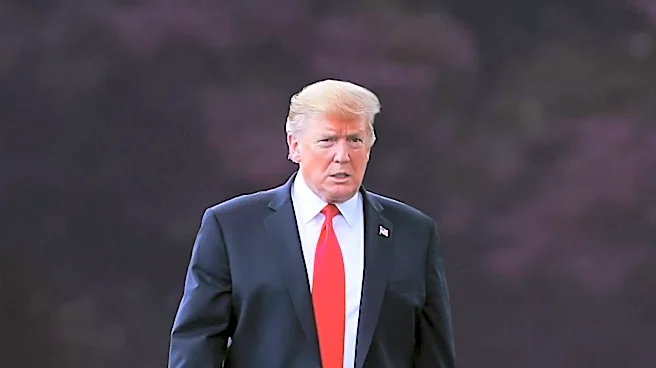
Spencer Cox, has an approval rating below 50%. Similarly, both Senator Mike Lee and Senator John Curtis have disapproval ratings that exceed their approval ratings. Even President Trump's approval has dropped within the traditionally red state of Utah. Governor Cox's approval fell by 10 percentage points, Senator Lee's by eight points, and Senator Curtis's by five points. The state Legislature also saw a six-point drop in approval. This widespread decline in voter satisfaction is attributed to a broad range of frustrations among voters, primarily concerning affordability issues and a perception that President Trump has not fulfilled campaign promises, with state officials seen as complicit due to their general support for his policies.
Why It's Important?
This poll reveals a notable shift in voter sentiment within a state that has historically been a Republican stronghold. The decline in approval for prominent Republican officeholders, including the governor and both U.S. senators, suggests a growing dissatisfaction that extends beyond typical partisan divides. This discontent is linked to national issues such as affordability, inflation, and the perceived failure of campaign promises, indicating that national political trends are increasingly influencing local and state-level perceptions. The fact that these officials are not facing ethical or personal crises but are still seeing their numbers drop, even among GOP faithful, underscores a broader voter restlessness. This could signal a potential vulnerability for Republican incumbents in future elections, prompting them to adjust their messaging and policy priorities to address voter concerns about economic issues and perceived political effectiveness.
What's Next?
While none of the directly impacted officeholders (Governor Cox, Senator Lee, Senator Curtis) are on the ballot in the upcoming November elections, the poll results suggest that the anti-incumbent sentiment could affect down-ballot races and legislative contests. Savvy politicians may attempt to position themselves as anti-establishment figures offering reforms and fresh perspectives to appeal to disgruntled voters. The findings also indicate that state legislative deliberations might be influenced by the heat incumbents faced in primaries, potentially leading to increased focus on issues like data centers and other hot-topic concerns. The midterm elections will serve as a crucial test to determine if this national anti-incumbent grumpiness is indeed spilling into Utah's political outcomes and whether it will lead to significant shifts in legislative and county races.
Beyond the Headlines
The poll results highlight a deeper trend of nationalization in Utah politics, where bipartisan and independent voters' frustrations with the president, Congress, the economy, and other national issues are directly impacting the approval of state-level officials. This suggests that local politicians are increasingly being judged through the lens of national political performance and broader economic conditions, rather than solely on their state-specific actions. The situation also points to a potential disconnect between voter expectations and the actual capacity of state officials to influence global economic trends, which are a primary source of voter concern. This dynamic could force a re-evaluation of political messaging strategies, with a greater emphasis on addressing national issues or clearly delineating the scope of state-level influence to manage voter expectations effectively.