




What's Happening?
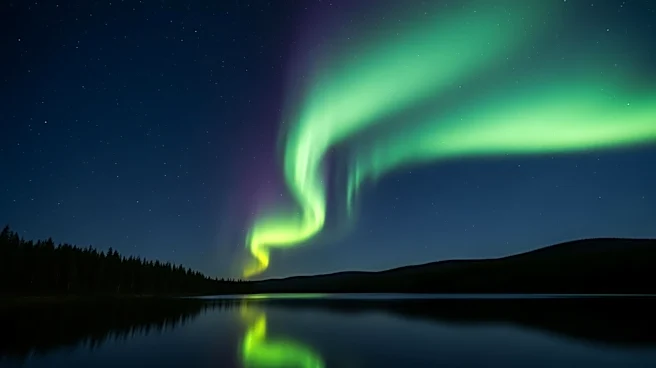
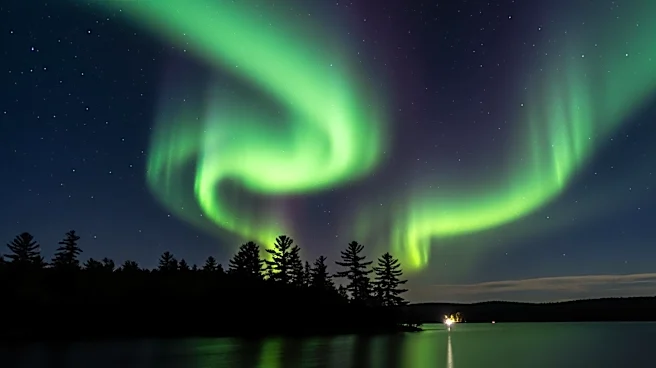
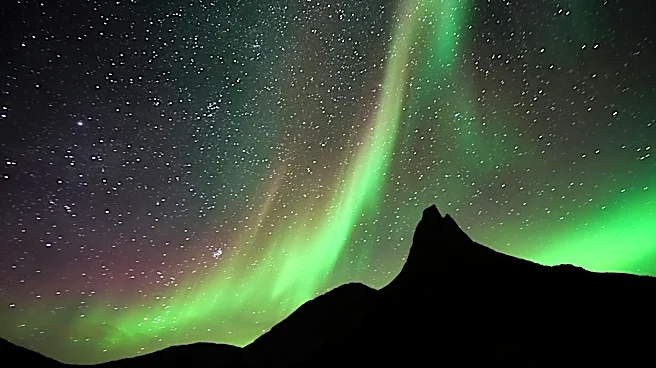
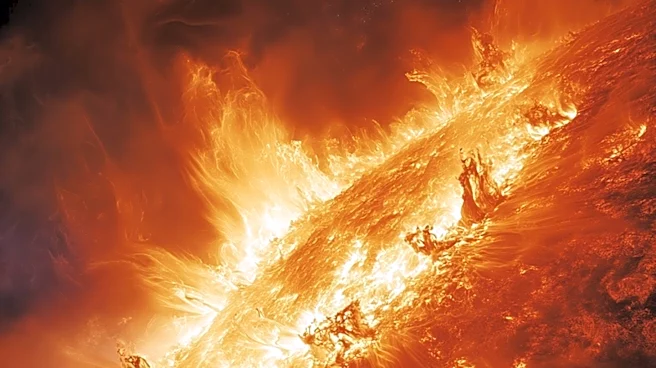
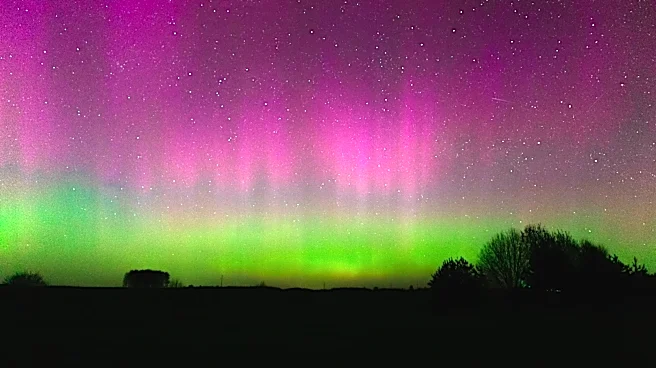
A recent coronal mass ejection (CME) from the Sun is set to create a rare display of the Northern Lights across parts of the continental United States. The NOAA's Space Weather Prediction Center forecasts a strong geomagnetic storm, with a Kp index of 7,
indicating a G3 level storm. This event is expected to occur from June 7 to June 9, with the potential for the auroras to be visible in states as far south as Oregon, Wyoming, and Pennsylvania. The visibility of the auroras will depend on factors such as cloud cover and light pollution, with the best viewing opportunities occurring in dark, rural areas.
Why It's Important?
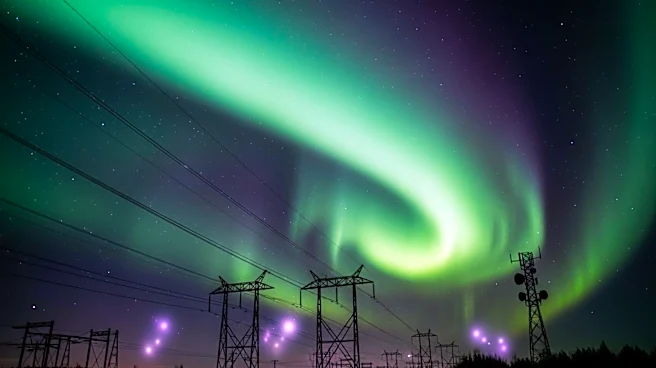
The occurrence of the Northern Lights in mid-latitude regions of the United States is a rare event, providing a unique opportunity for millions to witness this natural phenomenon. The geomagnetic storm could also have implications for technology, with the potential for minor radio blackouts and disruptions to satellite communications. This highlights the broader impact of space weather on technological systems and the importance of monitoring solar activity. The event also serves as a reminder of the interconnectedness of natural phenomena and human technology, emphasizing the need for preparedness in mitigating potential disruptions.
What's Next?
As the solar storm progresses, real-time monitoring of the interplanetary magnetic field and the CME's arrival will be crucial in predicting the extent of the auroral displays. NOAA and other space weather agencies will continue to provide updates and alerts to help the public and industries prepare for any potential impacts. For those interested in viewing the Northern Lights, staying informed through real-time aurora forecasts and finding optimal viewing locations will enhance the experience. The event also underscores the need for continued research and investment in space weather prediction capabilities.