







What's Happening?
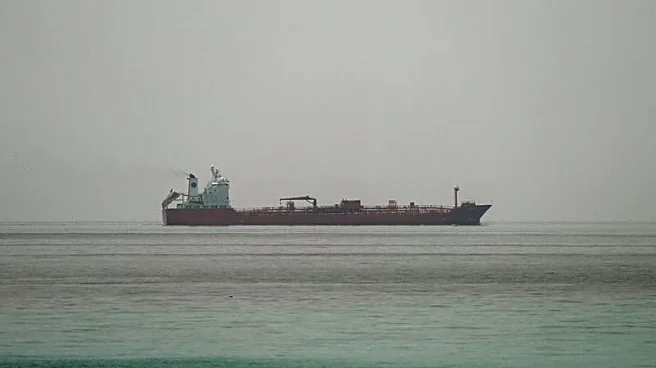
The French navy intercepted and boarded an oil tanker, the DF Peak, in the Indian Ocean, which is suspected of being part of Russia’s 'shadow fleet.' French President Emmanuel Macron announced the operation, stating that naval inspectors boarded the vessel
to verify its nationality due to doubts about its claimed Benin registration. The incident occurred approximately 450 nautical miles south of Réunion Island, a French overseas territory. Armed Forces Minister Catherine Vautrin confirmed that the tanker was being escorted to Réunion for further checks. President Macron indicated that the DF Peak is suspected of sailing under a false flag and engaging in illicit fuel transportation. The vessel is currently subject to sanctions from the U.S., EU, U.K., and Ukraine. This marks at least the sixth shadow-fleet tanker detained by French authorities in the past year.
Why It's Important?
This incident highlights the ongoing international efforts to enforce sanctions against Russia and disrupt its attempts to circumvent these measures, particularly in the energy sector. The boarding of the DF Peak by the French navy underscores the commitment of Western allies to monitor and interdict vessels suspected of illicit activities linked to sanctioned entities. For the U.S., this action supports its broader foreign policy objectives of isolating Russia economically and limiting its ability to fund ongoing conflicts. The use of a 'shadow fleet' and false flags by Russia-linked entities poses a significant challenge to global maritime security and regulatory frameworks, potentially impacting international shipping lanes and trade compliance. The interdiction demonstrates the practical difficulties and complexities involved in enforcing sanctions on a global scale.
What's Next?
The DF Peak is currently being escorted to Réunion for further inspections, which will likely involve a thorough investigation into its cargo, ownership, and operational history. The findings from these checks will determine the next steps, which could include legal proceedings, further sanctions, or the impounding of the vessel and its cargo. This incident may lead to increased scrutiny of other vessels suspected of being part of Russia's shadow fleet, potentially resulting in more interdictions by international naval forces. It could also prompt a review of existing maritime regulations and enforcement mechanisms to better address the challenges posed by vessels operating under false flags or engaging in illicit trade to bypass sanctions. International cooperation among allied nations is expected to intensify to counter such evasive tactics.
Beyond the Headlines
The boarding of the DF Peak reveals the evolving tactics used by sanctioned entities to maintain economic activity and the sophisticated countermeasures required to enforce international law. The concept of a 'shadow fleet' operating with false flags raises significant questions about maritime transparency, accountability, and the potential for environmental and safety risks associated with unregulated shipping. This situation also underscores the geopolitical tensions surrounding energy trade and the strategic importance of maritime control in enforcing international sanctions. The incident could have broader implications for global shipping insurance, port authorities, and financial institutions that might unknowingly facilitate such illicit activities. It highlights the need for enhanced intelligence sharing and coordinated international action to address these complex challenges effectively.