


What's Happening?
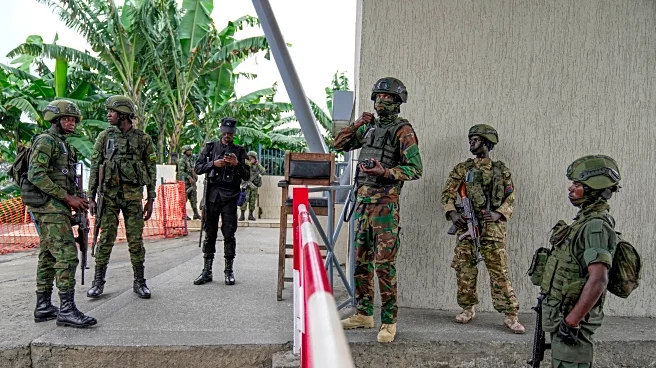
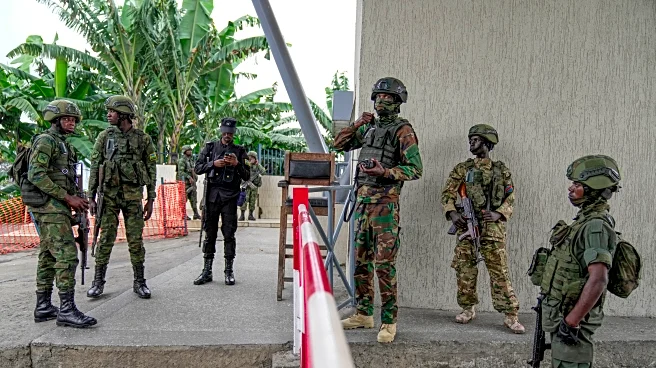
The United States has imposed sanctions on the Rwandan Defence Forces and four senior officials for their alleged support of the March 23 Movement (M23), an armed group involved in human rights abuses in Congo. This action follows a U.S.-mediated peace
agreement signed in December by Congolese President Felix Tshisekedi and Rwandan President Paul Kagame, which was intended to open the region's mineral reserves to U.S. interests. Despite the agreement, conflict persists in eastern Congo, with M23 being a significant player among numerous armed factions. The U.S. Treasury Department's Office of Foreign Assets Control claims that M23's operations are heavily supported by the Rwandan government. The sanctions target key military figures, including Vincent Nyakarundi and Ruki Karusisi. Rwanda has criticized the sanctions, claiming they misrepresent the conflict's reality.
Why It's Important?
The sanctions highlight ongoing tensions in the Great Lakes region of Africa, where control over mineral-rich areas is a significant issue. The U.S. action underscores its commitment to addressing human rights abuses and stabilizing the region, which is crucial for global mineral supply chains. The sanctions could strain U.S.-Rwanda relations and impact regional stability. The conflict has displaced millions, creating a humanitarian crisis. The U.S. aims to pressure Rwanda to withdraw support for M23, potentially influencing the dynamics of peace negotiations in the region.
What's Next?
The U.S. expects Rwanda to comply with the peace agreement and withdraw military support from M23. Ongoing negotiations between the Congolese government and M23, mediated by Qatar and the U.S., may be influenced by these sanctions. The international community will likely monitor Rwanda's response and the impact on regional stability. Further U.S. actions could follow if the situation does not improve, potentially affecting Rwanda's international standing and economic relations.