









What's Happening?
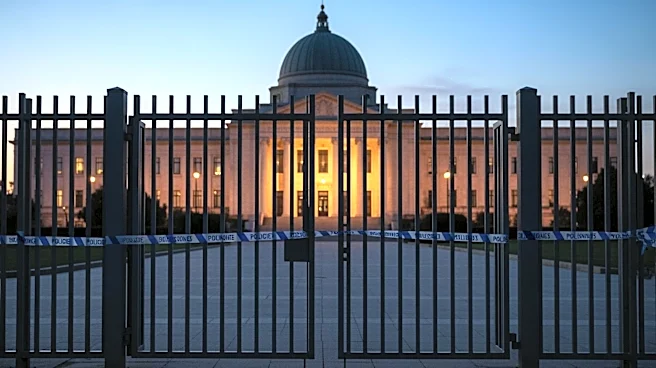
The House of Representatives has voted to reopen the majority of the Department of Homeland Security (DHS), concluding the longest agency shutdown in U.S. history. The bill, which excludes funding for Immigration and Customs Enforcement and Customs and Border
Protection, was passed through a voice vote on the 76th day of the shutdown. The shutdown began after Democrats withdrew support for a bipartisan spending bill following the killing of two U.S. citizens by federal agents in January. The decision to reopen DHS comes as May Day protests are expected to draw large crowds across the nation, with organizers calling for a boycott of work, school, and shopping to protest the Trump administration's policies.
Why It's Important?
The reopening of DHS is significant as it ends a prolonged period of uncertainty and disruption within a critical federal agency. The shutdown had implications for national security and the functioning of various DHS divisions. The exclusion of funding for certain immigration enforcement divisions highlights ongoing political tensions and debates over immigration policy. The May Day protests underscore widespread public discontent with the administration's policies, reflecting broader societal divisions and the mobilization of grassroots movements. These developments could influence future legislative negotiations and the political landscape leading up to upcoming elections.
What's Next?
With DHS reopened, attention may shift to how the agency will operate without full funding for immigration enforcement. The Trump administration's approach to immigration and border security will likely remain a contentious issue. Additionally, the administration faces a deadline to seek Congressional approval for military actions in Iran, which could further complicate political dynamics. The outcome of the May Day protests and their impact on public opinion and policy discussions will be closely watched. Stakeholders, including political leaders and civil society groups, may respond with renewed advocacy efforts or legislative proposals.