
What's Happening?
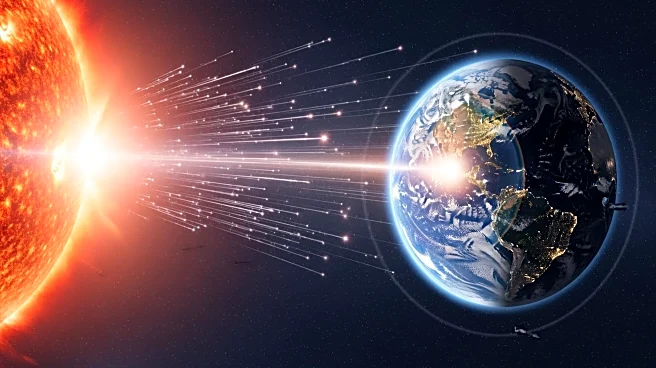
On January 19, Earth was hit by a severe solar radiation storm, classified as S4 by NOAA, marking the most intense event of its kind since 2003. This storm was triggered by a powerful magnetic eruption
on the sun, which accelerated charged particles, mainly protons, to high speeds. These particles traveled from the sun to Earth in a short time, penetrating Earth's magnetic defenses and reaching the polar regions. While the storm was significant, it posed no threat to people on the ground due to Earth's protective atmosphere and magnetic field. However, it did increase exposure risks for astronauts and airline crews flying polar routes, and affected satellites by interfering with onboard electronics and sensors.
Why It's Important?
The solar radiation storm highlights the vulnerability of space-based technologies and personnel to space weather events. Satellites, which are crucial for communication, navigation, and weather forecasting, can experience disruptions during such storms. The increased radiation exposure also poses risks to astronauts and airline crews, necessitating enhanced protective measures. This event underscores the importance of monitoring space weather to mitigate potential impacts on critical infrastructure and human safety. As reliance on satellite technology grows, understanding and preparing for space weather events becomes increasingly vital.