




What's Happening?
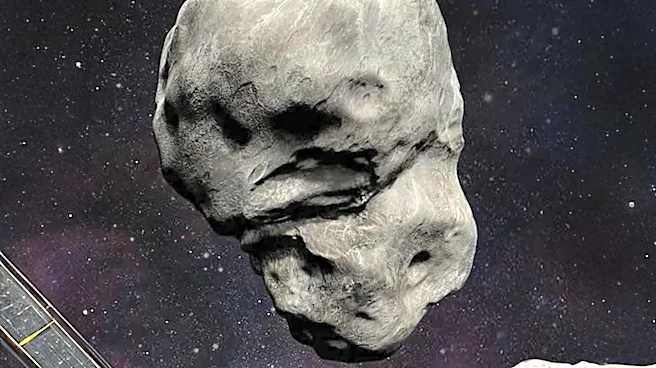
NASA's Jet Propulsion Laboratory has identified the near-Earth object 1998 SH2 as a comet, not an asteroid, after observing its irregular motion. Initially thought to be an asteroid due to the lack of visible cometary activity, further analysis revealed
it was venting gas, a characteristic of comets. This discovery was confirmed through observations from several powerful telescopes, which detected a faint tail. The study highlights the importance of tracking near-Earth objects to understand their nature and potential impact risks.
Why It's Important?
This finding has significant implications for planetary defense strategies. Understanding the true nature of near-Earth objects is crucial for assessing potential threats to Earth. Comets, which can exhibit unpredictable trajectories due to outgassing, pose different risks compared to asteroids. This research underscores the need for continuous monitoring and advanced observational techniques to accurately classify and track these objects. The study also suggests that many objects previously classified as asteroids may actually be comets, which could alter risk assessments and defense strategies.
What's Next?
NASA's upcoming Near-Earth Object (NEO) Surveyor mission will enhance the detection and tracking of hard-to-find objects like dark comets and asteroids. This mission aims to improve planetary defense by identifying objects that do not reflect much visible light. Continued research and observation will focus on refining classification methods and understanding the dynamics of these celestial bodies. The findings may lead to updates in planetary defense protocols and strategies.