




What's Happening?
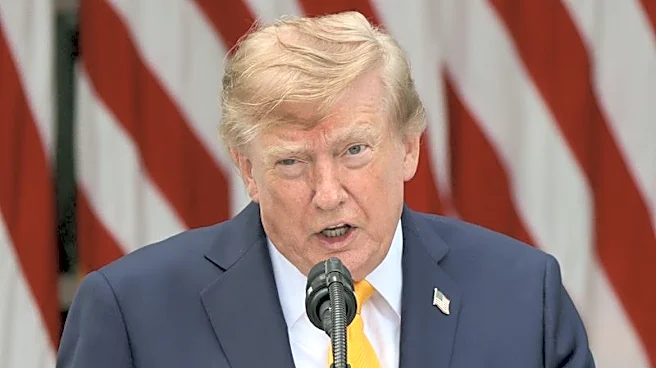
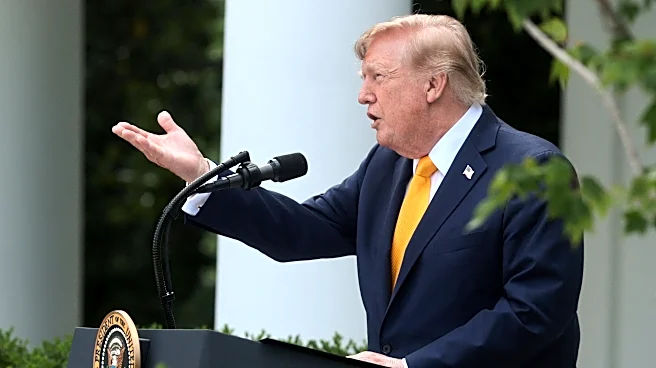
President Trump has set a firm deadline of January 1, 2027, for Canada to agree to a new trade deal, warning that failure to do so will result in a 50% tariff on Canadian automobiles, auto parts, and steel. This ultimatum was conveyed via Truth Social
and reported by Fox Business on August 24 and 25, 2026. The President explicitly stated, 'Build in the U.S. and there are zero tariffs. Canada will be treated like a state no longer.' This announcement follows a collapse in trade talks over the weekend, which led to ambassadors being recalled and negotiations suspended. The U.S. has already imposed 50% tariffs on $20 billion worth of Canadian goods, and Canada has responded with retaliatory 50% tariffs on U.S. steel, dairy, and agricultural equipment, effective September 8. General Motors CEO Mary Barra indicated on July 21, 2026, that the company is 'onshoring significant manufacturing starting next year' to increase U.S. production capacity to over 2 million units and mitigate tariff exposure, planning to invest $1 to $1.5 billion this year for this purpose.
Why It's Important?
The potential imposition of 50% tariffs on Canadian autos, parts, and steel by January 1, 2027, carries significant implications for the integrated North American automotive supply chain and the broader U.S. economy. Automakers like General Motors and Ford heavily rely on this interconnected system, which cannot be re-sourced within a short timeframe. Such tariffs would likely lead to increased production costs, potentially higher vehicle prices for U.S. consumers, and disruptions in manufacturing operations. The move is designed to incentivize manufacturing within the United States, as indicated by the 'zero tariffs' for U.S.-built products. While this could boost domestic production and job creation in the long term, the immediate impact would be a period of uncertainty and financial strain for companies with cross-border operations. The dispute also highlights the fragility of international trade agreements and the potential for political rhetoric to translate into substantial economic consequences, affecting both U.S. and Canadian industries and their workforces.
What's Next?
The immediate focus will be on whether Canada and the U.S. can resume and successfully conclude trade negotiations before the January 1, 2027, deadline. The threat of 50% tariffs is a powerful leverage point, but it also risks escalating the trade dispute further. Automakers like General Motors are already taking proactive steps, with CEO Mary Barra confirming plans to onshore significant manufacturing and invest substantially in U.S. production to reduce tariff exposure. This suggests a strategic shift towards greater domestic self-reliance in manufacturing, which could accelerate if tariffs are implemented. The legal validity of such tariffs, particularly under Section 338, is also a point of contention, with a former USTR counsel warning that collected duties could be refunded if courts rule against them. This legal uncertainty adds another layer of complexity to the situation, potentially leading to challenges and appeals if the tariffs are enacted. The coming months will likely see intense diplomatic efforts and strategic adjustments by affected industries.
Beyond the Headlines
This trade dispute extends beyond immediate economic impacts, touching upon broader themes of national sovereignty, economic nationalism, and the future of global supply chains. President Trump's 'Build in the U.S.' directive reflects a growing sentiment towards prioritizing domestic production and reducing reliance on international partners, even close allies like Canada. This approach could fundamentally reshape manufacturing strategies, encouraging companies to internalize more of their supply chains within national borders. The emphasis on tariffs as a tool for industrial policy raises questions about the long-term stability of international trade relations and the potential for a more fragmented global economy. Furthermore, the legal challenges to the tariffs highlight the tension between executive authority and established trade laws, potentially setting precedents for future trade policy. The situation also underscores the political leverage that can be exerted through economic threats, influencing corporate decisions and national economic planning in profound ways.