



What's Happening?
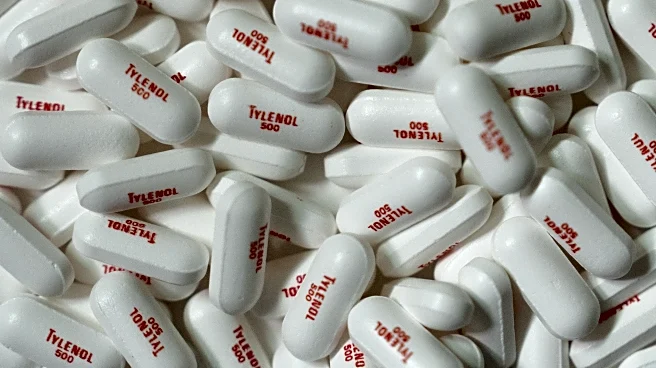
A study published in The Lancet reveals that emergency room orders for Tylenol, or acetaminophen, for pregnant women decreased by 10% following President Trump's warning in September 2025 about a potential link between Tylenol use and autism. Despite
the lack of scientific evidence supporting this claim, the president's statement had an immediate impact on prescribing and patient behavior in emergency departments across the U.S. The study, led by Dr. Jeremy Faust from Brigham and Women's Hospital, analyzed data from over 1,600 hospitals and found no change in acetaminophen orders for non-pregnant women.
Why It's Important?
This development highlights the significant influence of presidential statements on public health behaviors, even when unsupported by scientific evidence. The reduction in Tylenol use among pregnant women raises concerns about inadequate pain management and fever control, which are crucial for maternal and fetal health. The incident underscores the responsibility of public figures to ensure their statements are based on credible data, as misinformation can lead to unintended health consequences.
What's Next?
While Tylenol use among pregnant women began returning to normal by December, the incident has sparked discussions about the need for clear communication and evidence-based guidance in public health. The study also noted an increase in prescriptions for leucovorin, a B vitamin suggested by the president as an autism treatment, despite a lack of clinical trials supporting its efficacy. This situation may prompt further scrutiny of how health information is disseminated and the role of government officials in shaping public perceptions.