
What's Happening?
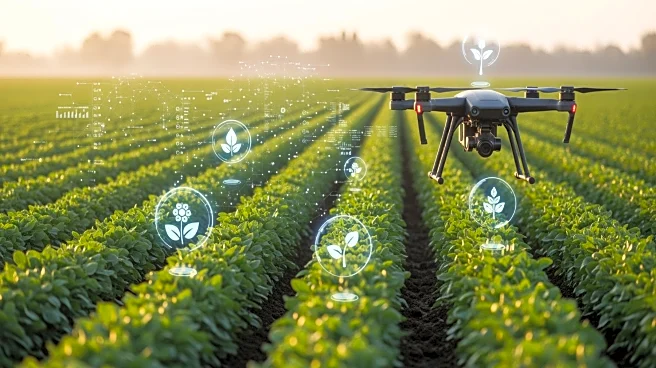
Penn State University has initiated a three-year program aimed at integrating artificial intelligence (AI) into agriculture, particularly focusing on tree fruit farming. This initiative, supported by over
$738,000 in funding from government and university sources, seeks to train a select group of experts to become leaders in applying AI to agricultural practices. The program is designed to foster collaboration between academia, industry, and farmers, equipping participants with skills in research, mentorship, and public speaking. The goal is to address challenges such as diseases and pests exacerbated by climate change, using AI to improve crop resilience and productivity. However, the program also acknowledges the environmental impact of AI data centers, which consume significant amounts of electricity and water, potentially affecting biodiversity.
Why It's Important?
The integration of AI into agriculture represents a significant advancement in addressing the challenges posed by climate change. By enhancing the ability of farmers to manage crops more effectively, this program could lead to increased agricultural productivity and sustainability. The use of AI can expedite solutions for issues like pest control and disease management, which are becoming more prevalent due to global warming. However, the environmental footprint of AI technology, particularly its energy and water consumption, poses a challenge that needs to be addressed. The program's success could influence broader adoption of AI in agriculture, potentially transforming farming practices and contributing to food security.
What's Next?
As the program progresses, the trained experts are expected to disseminate their knowledge and techniques to farmers and other stakeholders, potentially leading to widespread adoption of AI in agriculture. The program aims to create a network of professionals who can lead innovation in climate-smart agriculture. Additionally, there may be increased efforts to mitigate the environmental impact of AI technology, such as investing in renewable energy sources to power data centers. The outcomes of this program could influence policy decisions and funding allocations for similar initiatives in the future.
Beyond the Headlines
The program highlights the dual nature of technological advancements, where benefits in one area can lead to challenges in another. The environmental impact of AI data centers underscores the need for sustainable practices in technology deployment. This initiative also reflects a growing trend of interdisciplinary collaboration to solve complex global issues, combining expertise from various fields to create comprehensive solutions. The success of this program could set a precedent for similar efforts in other sectors, emphasizing the importance of balancing technological progress with environmental stewardship.