

What's Happening?
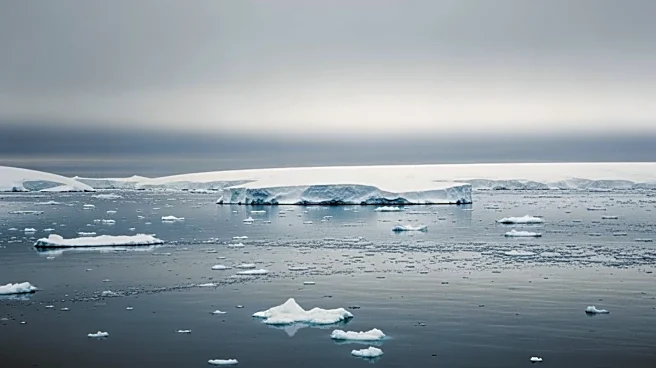
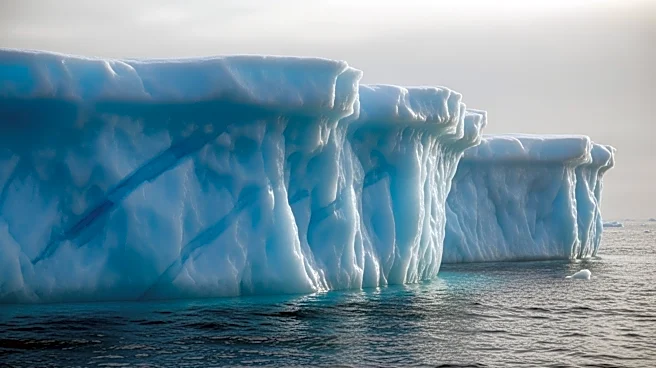
The Thwaites Glacier in Antarctica, often referred to as the 'Doomsday Glacier,' is on the brink of losing its eastern ice shelf, according to recent satellite imagery. This ice shelf acts as a critical buttress, slowing the glacier's flow into the ocean.
Its potential disintegration, expected in 2026, could accelerate the glacier's contribution to global sea level rise. The Thwaites Glacier has been retreating since the 1980s due to warm ocean waters melting its base. The British Antarctic Survey highlights the glacier's retreat of 8.7 miles since 1992, emphasizing the urgent need for continued research and monitoring.
Why It's Important?
The potential collapse of the Thwaites Glacier's ice shelf poses a significant threat to global sea levels, with the potential to raise them by 2.1 feet if the glacier fully collapses. This event would have catastrophic implications for coastal communities worldwide. The situation underscores the broader impacts of climate change, as warmer ocean currents driven by altered wind patterns contribute to the glacier's instability. The Thwaites Glacier is a key component of the West Antarctic ice sheet, and its destabilization could trigger further ice loss, marking a critical tipping point in climate change.
What's Next?
Researchers from the International Thwaites Glacier Collaboration are closely monitoring the glacier's condition to better understand the mechanisms driving its instability. The scientific community is focused on modeling future scenarios to predict the glacier's behavior and potential impacts on global sea levels. As the ice shelf's disintegration looms, there is an urgent call for international cooperation to address the underlying causes of climate change and mitigate its effects. The situation highlights the need for comprehensive climate policies and adaptive strategies to protect vulnerable coastal regions.