




What's Happening?
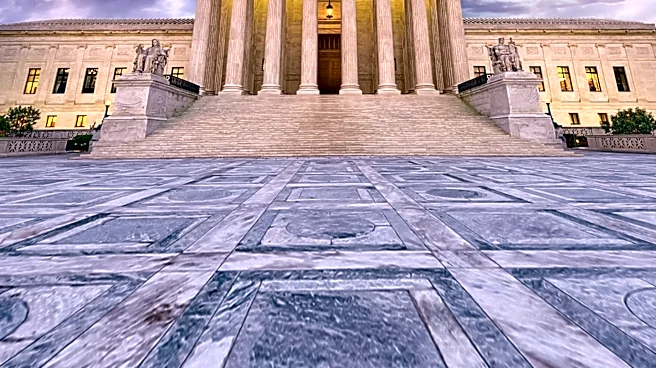
The Supreme Court is set to hear arguments in Suncor Energy, Inc. v. County Commissioners of Boulder County, a case that will address whether state-level lawsuits against energy companies for their role in climate change are preempted by federal law.
This case, scheduled for the first day of the October 2026 Term, is the first of its kind involving climate change to reach the Supreme Court. The lawsuit was brought by the county commissioners of Boulder County and the city of Boulder against Exxon Mobil Corporation and three Suncor Energy entities in Colorado state court. The plaintiffs are seeking damages for the alleged exacerbation of climate change and its impact on Boulder's property and residents, claiming the companies knowingly contributed to climate change while misleading the public. The Colorado Supreme Court previously ruled that Boulder's claims are not preempted by federal law, noting that the federal Clean Air Act does not expressly preempt such state tort liability, nor does it imply field or conflict preemption. The energy companies, however, argue for preemption based on constitutional grounds, the Clean Air Act, and potential foreign policy implications.
Why It's Important?
This Supreme Court case holds significant importance for environmental law, corporate accountability, and the balance of power between federal and state jurisdictions in the United States. A ruling in favor of preemption could severely limit the ability of states and local governments to pursue legal action against corporations for climate-related damages, potentially shifting the burden of climate change mitigation and adaptation costs away from polluters and onto taxpayers. Conversely, a ruling against preemption could open the door for a wave of similar lawsuits across the country, compelling energy companies to face financial liabilities for their historical contributions to climate change. This could have profound economic implications for the energy industry, potentially influencing investment decisions, operational practices, and the transition to cleaner energy sources. Furthermore, the case will test the boundaries of preemption doctrine, particularly in areas where federal law may not explicitly address state-level actions, and could redefine the scope of state authority in addressing issues with interstate and international dimensions like climate change.
What's Next?
The Supreme Court will hear oral arguments in Suncor Energy, Inc. v. County Commissioners of Boulder County on the first day of its October 2026 Term. Following arguments, the justices will deliberate and eventually issue a ruling, which could take several months. The decision will likely clarify the application of preemption doctrine in the context of climate change litigation, potentially setting a precedent for numerous similar cases pending in state and federal courts. Depending on the outcome, there could be significant reactions from environmental advocacy groups, state and local governments, and the energy industry. If the Court finds preemption, it could lead to legislative efforts at the federal level to address climate change liability or to clarify the roles of state and federal law. If preemption is denied, energy companies may face increased legal and financial pressure, potentially leading to more settlements or changes in business practices. The ruling will also be closely watched by international bodies and other nations grappling with similar legal challenges related to climate change.
Beyond the Headlines
This case delves into the complex and evolving legal landscape surrounding climate change, highlighting the challenges of applying traditional legal doctrines to novel environmental issues. The energy companies' arguments, particularly those invoking constitutional limits on state regulation due to the interstate nature of pollution and potential foreign policy impacts, raise fundamental questions about federalism and the scope of state sovereignty. If the Court accepts these arguments, it could have far-reaching implications beyond climate change, potentially limiting states' abilities to regulate any activity with interstate or international effects, including other environmental protections or public health initiatives. The case also underscores the tension between scientific consensus on climate change and the legal mechanisms available to address its consequences. The outcome could influence public perception of corporate responsibility for environmental harm and the role of the judiciary in shaping climate policy in the absence of comprehensive legislative action. It also brings to the forefront the debate over whether the courts are the appropriate venue for resolving such complex, multi-faceted issues.