





What's Happening?
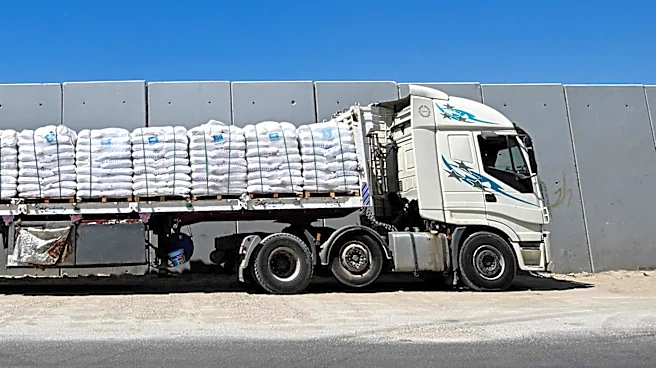
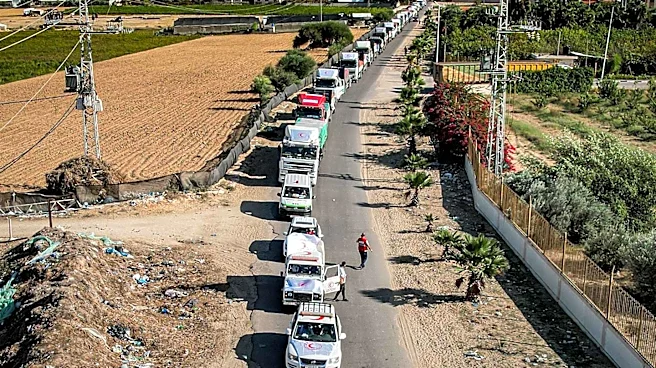
The United Arab Emirates (UAE) has sent five humanitarian aid convoys, totaling 819 tonnes of essential supplies, into the Gaza Strip. These deliveries are part of the ongoing 'Operation Gallant Knight 3' mission, aimed at supporting Palestinians in the territory.
The convoys consisted of 63 lorries carrying food and other vital goods. All relief efforts are coordinated through the UAE Humanitarian Aid Logistics Centre in Al Arish, Egypt. This center functions as the primary operational hub for receiving, sorting, preparing, and dispatching humanitarian supplies into Gaza. Officials emphasize that this structured logistics process is crucial for ensuring that aid reaches its intended recipients without interruption, addressing the severe shortages of food and basic necessities faced by civilians in Gaza.
Why It's Important?
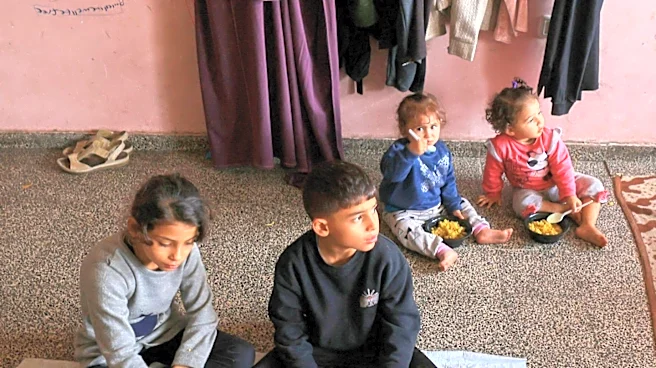
The continuous dispatch of humanitarian aid to Gaza is critically important due to the acute shortages of food and basic necessities experienced by its civilian population. The UAE's 'Operation Gallant Knight 3' and the central role of the Al Arish logistics center highlight the international community's efforts to mitigate a deepening humanitarian crisis. The consistent flow of supplies is vital for sustaining life and preventing further deterioration of living conditions in Gaza. Without such coordinated efforts, the health and well-being of hundreds of thousands of people would be severely compromised, potentially leading to widespread famine and increased mortality rates. This operation underscores the necessity of robust logistical frameworks to deliver aid effectively in conflict-affected regions, ensuring that vulnerable populations receive timely and adequate support.
What's Next?
The UAE Humanitarian Aid Logistics Centre in Al Arish, Egypt, is expected to continue its operations, preparing and dispatching convoys on a regular basis. The ongoing commitment to 'Operation Gallant Knight 3' suggests a sustained effort to address the humanitarian crisis in Gaza. Future actions will likely focus on maintaining and potentially increasing the volume of aid deliveries, adapting to the evolving needs of the civilian population. International organizations and other nations may also continue to coordinate their relief efforts through or in conjunction with the Al Arish hub to maximize efficiency and impact. The long-term goal remains to ensure a consistent and uninterrupted supply chain of essential goods to alleviate the suffering in Gaza.
Beyond the Headlines
The establishment and sustained operation of the UAE Humanitarian Aid Logistics Centre in Al Arish, Egypt, represents a significant model for international humanitarian response in complex geopolitical environments. Beyond the immediate relief provided, this initiative demonstrates the critical role of neutral logistical hubs in facilitating aid delivery across borders, especially when direct access is challenging. It highlights the importance of regional cooperation and infrastructure in addressing humanitarian crises, potentially setting a precedent for future large-scale relief operations. The focus on a structured logistics process also underscores a shift towards more organized and efficient aid distribution, aiming to minimize waste and maximize the impact of humanitarian efforts on the ground. This approach could influence how international aid is managed in other conflict zones globally.