









What's Happening?
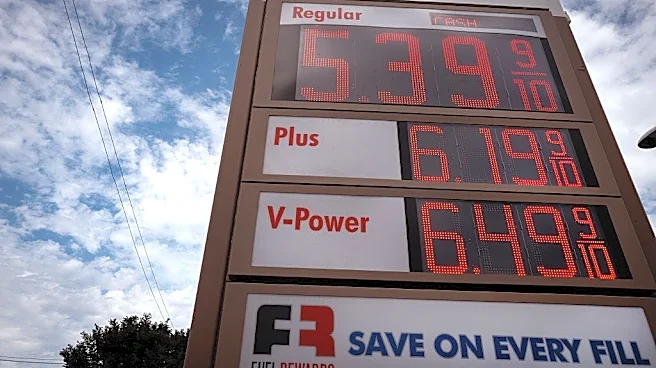
California drivers are anticipated to see a decrease in gas prices by the end of October, following weeks of significant increases that pushed the statewide average above $6 per gallon. As of Thursday, the average price for a gallon of regular gasoline
in California reached $6.08, marking a 19-cent jump in just one week, according to AAA. The Bay Area experienced even steeper increases, with San Jose and San Francisco seeing prices climb by 20 and 21 cents, respectively, over the same period. This expected relief is attributed to the seasonal transition from the more expensive summer-blend gasoline to the winter blend, which typically occurs in late October. Patrick De Haan, head of petroleum analysis at GasBuddy, estimates this switch could reduce prices by 10 to 30 cents per gallon.
Why It's Important?
The fluctuating gas prices in California have significant economic implications for both consumers and businesses. High fuel costs directly impact household budgets, reducing discretionary spending and potentially slowing economic activity. For businesses, particularly those reliant on transportation and logistics, rising diesel prices—which have reached a record $8.35 per gallon—translate into higher operating costs. These increased costs are often passed on to consumers through higher prices for goods and services, contributing to inflationary pressures. The anticipated drop in prices, even if modest, could provide some relief, potentially boosting consumer confidence and easing financial burdens. However, the volatility underscores the state's vulnerability to global oil market dynamics and regional refining capacities, highlighting the need for long-term energy strategies.
What's Next?
While a seasonal drop in gas prices is expected by the end of October due to the switch to winter-blend gasoline, the immediate future remains uncertain. Patrick De Haan warns that prices could continue to climb before the seasonal change, depending on developments in the Middle East and around the Strait of Hormuz. Any new attacks or escalations in the region could accelerate price increases. Beyond the gas pump, the surge in diesel prices is expected to impact retail prices for everyday goods in the coming months, potentially leading to 'sticker shock' during the holiday shopping season. Meat and produce are particularly vulnerable to these increased transportation costs. Manufacturers of less perishable goods might absorb some costs to avoid losing sales, but overall, consumers should prepare for potential price adjustments.
Beyond the Headlines
The persistent high gas prices in California, even with an anticipated seasonal dip, highlight deeper systemic issues related to energy policy, environmental regulations, and global geopolitical stability. California's unique blend requirements, while aimed at reducing emissions, contribute to higher production costs and limit supply flexibility. This situation underscores the delicate balance between environmental goals and economic affordability. Furthermore, the impact of international conflicts on domestic fuel prices reveals the interconnectedness of global energy markets and the vulnerability of local economies to distant events. The ongoing debate about energy independence, renewable energy investments, and the role of fossil fuels will likely intensify as consumers continue to face the direct financial consequences of these complex factors.