
What's Happening?
Russia's ongoing military actions have severely impacted Ukraine's energy infrastructure, leading to widespread power outages and emergency power cuts. The attacks have caused over $20 billion in direct
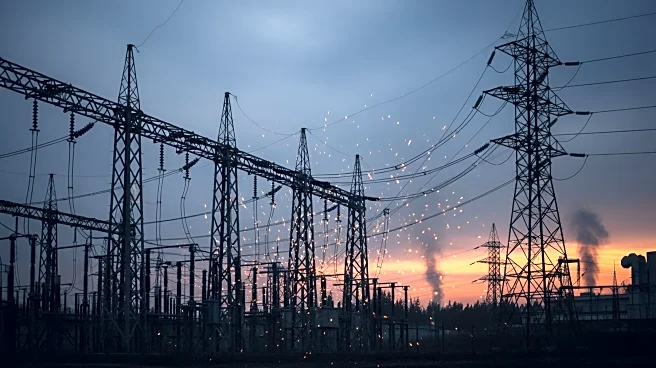
war damage to Ukraine's energy sector, as estimated by the World Bank, European Commission, and the United Nations. To prevent a complete grid collapse, operators have implemented rolling blackouts, prioritizing power for hospitals and critical services while leaving many homes without electricity. The situation is dire, with residents in Kyiv and other areas facing harsh winter conditions without reliable power. The damage to power stations and transmission lines is extensive, and repairs are being conducted under challenging conditions, often by torchlight.
Why It's Important?
The energy crisis in Ukraine has significant implications for both the country and the broader European region. The destruction of energy infrastructure not only affects the daily lives of Ukrainian citizens but also poses a threat to the stability of the region's energy supply. The reliance on rolling blackouts to manage the grid highlights the fragility of the current situation. This crisis underscores the vulnerability of energy systems in conflict zones and the potential for such disruptions to have cascading effects on neighboring countries. The international community's response, including potential aid and support for infrastructure repair, will be crucial in mitigating the impact of these attacks.
What's Next?
As Ukraine continues to face challenges in restoring its energy infrastructure, international support and cooperation will be vital. Efforts to repair and rebuild damaged facilities are ongoing, but the scale of destruction means that recovery will be a long-term process. The Ukrainian government may seek further assistance from international organizations and allies to bolster its energy resilience. Additionally, there may be increased focus on developing decentralized power generation solutions to reduce dependency on vulnerable infrastructure. The situation also raises questions about the security of energy systems in conflict zones and the need for enhanced protective measures.
Beyond the Headlines
The energy crisis in Ukraine highlights broader issues related to energy security and the geopolitical implications of infrastructure attacks. The targeting of energy systems as a tactic in warfare raises ethical and legal questions about the protection of civilian infrastructure during conflicts. This situation may prompt discussions on international norms and agreements to safeguard critical infrastructure in war zones. Furthermore, the crisis could accelerate efforts to diversify energy sources and invest in renewable energy solutions to enhance resilience against such attacks in the future.





