







What's Happening?
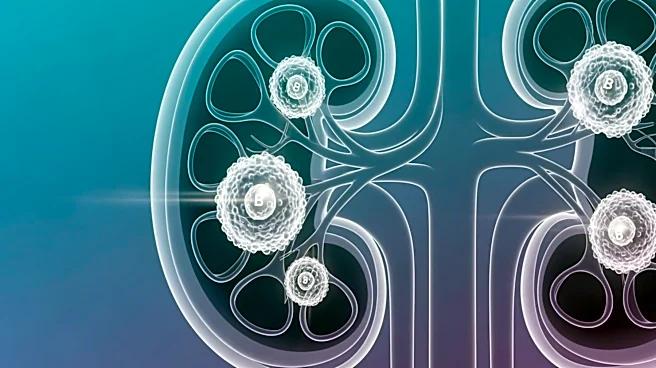
Researchers at the Perelman School of Medicine at the University of Pennsylvania have developed a detailed map of the human kidney, revealing a previously unrecognized form of diabetic kidney disease (DKD) characterized by clusters of immune cells, specifically
B cells. This discovery, published in Nature, indicates that these B-cell clusters are associated with faster disease progression. The study involved analyzing kidney samples from numerous patients, identifying patterns of cell interaction and tissue changes as the disease worsens. The findings suggest that diabetic kidney disease is not a single condition but comprises different disease types, which could lead to more targeted treatments. Diabetic kidney disease affects 20% to 40% of people with diabetes and is a leading cause of chronic kidney disease and end-stage kidney disease.
Why It's Important?
This research is significant as it challenges the traditional view of diabetic kidney disease as a uniform condition, highlighting the need for personalized treatment approaches. By identifying specific immune cell clusters linked to disease progression, the study opens the door for more precise therapies that target these immune responses. This could improve outcomes for patients with diabetic kidney disease, a condition affecting a significant portion of the diabetic population in the U.S. and globally. The ability to predict disease progression through new gene-based signatures and blood tests could revolutionize how this disease is managed, potentially reducing the burden of chronic kidney disease.
What's Next?
The study's findings could lead to the development of new diagnostic tools and treatments that specifically target the immune processes identified in the kidney tissue. Researchers may focus on creating therapies that modulate the immune response within the kidney, potentially slowing or halting disease progression. Further research is needed to explore the mechanisms by which B cells contribute to kidney damage and to validate the new diagnostic tools in larger patient populations. The study also sets the stage for similar approaches in other complex diseases, where understanding tissue-specific immune responses could lead to breakthroughs in treatment.