



What's Happening?
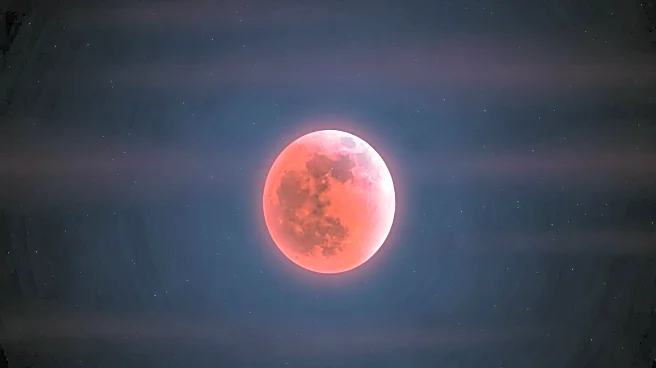
A total lunar eclipse is set to occur on March 3, 2026, transforming the moon into a 'blood moon' visible across parts of North America, Australia, New Zealand, and eastern Asia. This celestial event happens when the Earth positions itself between the sun
and the moon, casting a shadow that turns the moon a coppery red. The eclipse will be visible in various time zones across the U.S., with the best views expected in the western half of North America. Observers in New York will see the moon enter totality and turn red, although the maximum eclipse will occur after moonset, making it invisible. The totality phase, when the moon is fully immersed in Earth's shadow, will last approximately 58 minutes.
Why It's Important?
Lunar eclipses, particularly total ones, are significant for both scientific observation and public interest. They offer a unique opportunity for astronomers and enthusiasts to study the Earth's atmosphere and its effects on the moon's appearance. For the general public, such events are a chance to engage with astronomy and appreciate the dynamics of our solar system. The visibility of this eclipse across a large portion of North America means that millions will have the opportunity to witness this natural phenomenon, potentially sparking increased interest in space science and education.
What's Next?
As the date approaches, astronomers and local observatories are likely to organize viewing events and educational programs to enhance public engagement. Weather conditions will play a crucial role in visibility, so skywatchers are advised to check local forecasts. Additionally, online platforms may offer live streams of the eclipse for those unable to view it in person. This event could also lead to increased discussions about future astronomical events and the importance of preserving dark skies for optimal viewing conditions.