



What's Happening?
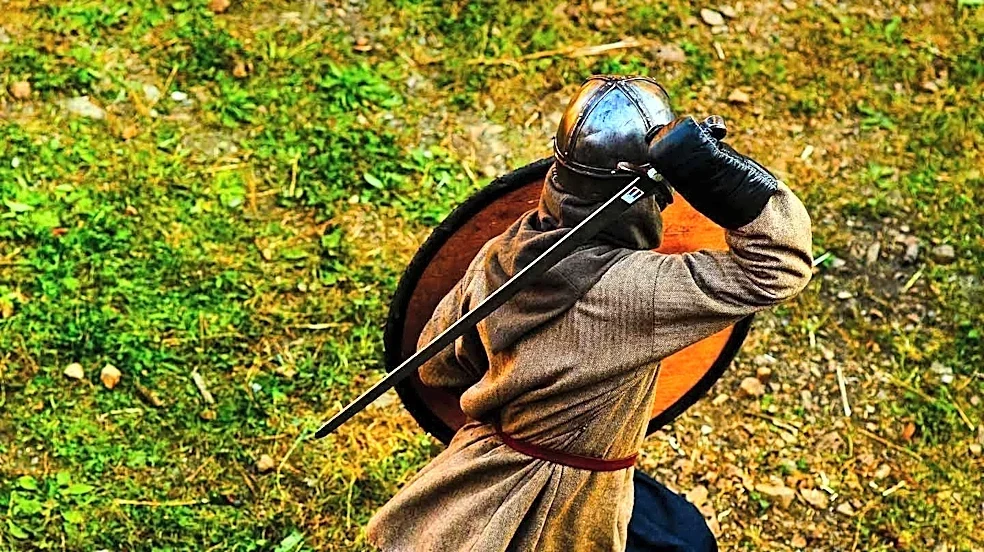
Kingston, New York, recently celebrated the anniversary of its burning by British forces in 1777 with a historical reenactment. Mayor Steve Noble actively participated in the event, which featured musket fire and pageantry, drawing hundreds of spectators
to the city's historic center. The theme for this year's festival was 'the many faces of revolution,' aiming to explore diverse perspectives of individuals who lived through that tumultuous period. During the reenactment, Mayor Noble played a role, being brought out in cuffs at the Four Corners as the Union Jack was raised over Kingston. When offered a chance to surrender, he defiantly declared, 'We will take arms!' This act was met with cheers and chants of 'No Kings' from the crowd. The event highlighted Kingston's rich history as New York state's first capital and the efforts of reenactors to preserve this heritage. The reenactment also saw some modern-day clashes, such as a car alarm interrupting the historical atmosphere and a participant expressing a critical view of the American Revolution as a 'racist, colonial project.'
Why It's Important?
This reenactment is important for several reasons, primarily in its role in preserving and educating the public about a significant event in U.S. history. By actively involving local officials like Mayor Steve Noble, the event gains prominence and encourages community engagement in historical understanding. For the city of Kingston, it reinforces its identity as New York's first capital and a site of crucial Revolutionary War events, potentially boosting local tourism and cultural appreciation. The inclusion of diverse perspectives, as indicated by the theme 'many faces of revolution,' is crucial for a more nuanced understanding of historical events, allowing for discussions beyond traditional narratives. The event also serves as a reminder of the foundational struggles for independence and the principles of self-governance, which resonate with contemporary discussions about democracy and civic participation. The mayor's participation, particularly his defiant stance in the reenactment, symbolizes the enduring spirit of resistance and the importance of historical memory in shaping community values.
What's Next?
Following the main reenactment, organizers are scheduled to host a colonial grand ball, extending the historical immersion for participants and attendees. Events are planned to continue through the following day, culminating in a 'USA 250 Finale' in the afternoon. Mayor Noble also noted a 'No Kings: Vote Early' rally occurring simultaneously in another part of town, drawing a connection between historical struggles for self-determination and contemporary civic engagement. This suggests that future iterations of the event may continue to intertwine historical commemoration with modern-day calls for democratic participation. The ongoing efforts of reenactors and local officials to preserve Kingston's history indicate that such events will likely remain a staple in the city's cultural calendar, potentially expanding to include more educational programs and community dialogues on the complexities of the American Revolution and its legacy. The focus on diverse perspectives may also lead to more inclusive storytelling in future commemorations.
Beyond the Headlines
The reenactment in Kingston, while a historical celebration, also touches upon deeper societal and political undercurrents. The comment from Josh Horowitz, describing the American Revolution as the 'beginning of a racist, colonial project,' highlights the ongoing re-evaluation of U.S. history and the differing interpretations of its founding principles. This perspective, though perhaps controversial to some, reflects a broader national conversation about historical accuracy, systemic injustices, and the legacy of colonialism. Mayor Noble's subsequent remarks connecting the historical struggle for freedom to contemporary concerns about democracy being 'at risk' and the importance of voting, further underscore the event's relevance beyond mere historical re-enactment. It suggests that such commemorations can serve as platforms for civic discourse, prompting reflection on how historical events continue to shape present-day political landscapes and societal values. The 'No Kings' chant, echoing revolutionary sentiments, can be seen as a symbolic expression of vigilance against perceived threats to democratic ideals, whether historical or contemporary.