







What's Happening?
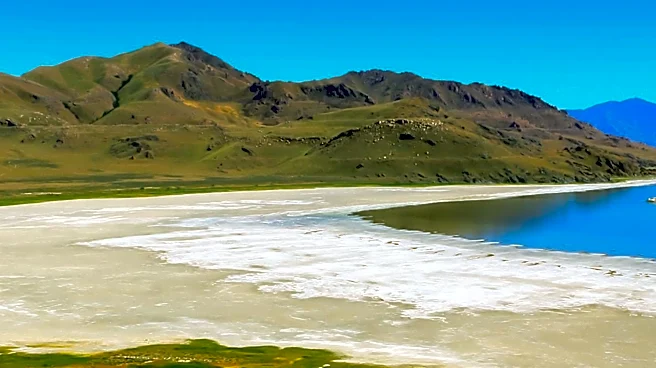
The Great Salt Lake in Utah is home to a massive population of brine shrimp (Artemia franciscana), which are crucial to both the global economy and the local ecosystem. The lake contributes 40% to 45% of the world market demand for brine shrimp cysts,
making it the largest sole producer. These cysts are processed into millions of tons of protein-rich seafood, primarily used in the commercial aquaculture industry as feed for fry (baby fish), shrimp, prawns, lobster, and crab. The 2019-2020 brine shrimp season saw a record catch of 44 million pounds of raw cysts. Beyond their economic value, brine shrimp are vital to the Great Salt Lake's food web, fueling millions of migratory birds, including North America's eared grebes, which consume up to 30,000 brine shrimp daily.
Why It's Important?
The brine shrimp population in the Great Salt Lake represents a significant economic asset for Utah and a critical component of global aquaculture. Its role in providing high-quality feed for farmed seafood underscores its importance in supporting a growing industry that addresses global food demands. Ecologically, the brine shrimp are foundational to the Great Salt Lake's unique ecosystem, sustaining vast populations of migratory birds that rely on the lake as a crucial stopover point. The long evolutionary history of Artemia, adapting to hypersaline conditions, highlights the resilience of life in extreme environments. The continued health of the brine shrimp population is therefore essential for both economic stability and biodiversity conservation in the region.
What's Next?
Ongoing monitoring and management of the Great Salt Lake's brine shrimp population will be critical to ensure sustainable harvesting practices and ecological balance. Researchers will continue to study the impact of environmental changes, such as fluctuating water levels and salinity, on brine shrimp abundance and distribution. Efforts will also focus on understanding the long-term effects of climate change on the lake's ecosystem and the brine shrimp's role within it. Conservation initiatives aimed at protecting the Great Salt Lake and its surrounding habitats will be essential to safeguard both the economic benefits derived from brine shrimp and the ecological services they provide to migratory bird populations.
Beyond the Headlines
The story of the Great Salt Lake's brine shrimp extends beyond economics and ecology, touching upon the broader themes of environmental stewardship and the interconnectedness of global systems. The reliance of a global industry on a single, unique ecosystem in Utah emphasizes the fragility of such dependencies and the need for responsible resource management. The brine shrimp's ancient lineage and adaptation to extreme conditions also offer valuable insights for astrobiology and the search for life in similar environments elsewhere. This tiny crustacean serves as a powerful symbol of the delicate balance between human economic activity and the preservation of natural wonders, urging a holistic approach to environmental policy and resource utilization.