






What's Happening?
The Federal Emergency Management Agency (FEMA) has denied Hawaii's request for individual assistance for residents affected by Hurricane Lala. This FEMA aid typically covers housing costs for displaced individuals, home repairs, and other disaster-related
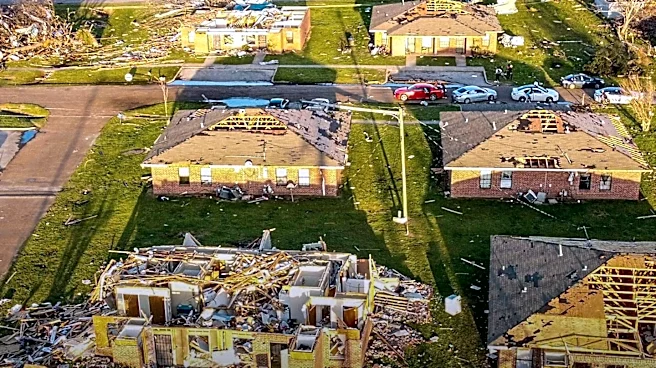
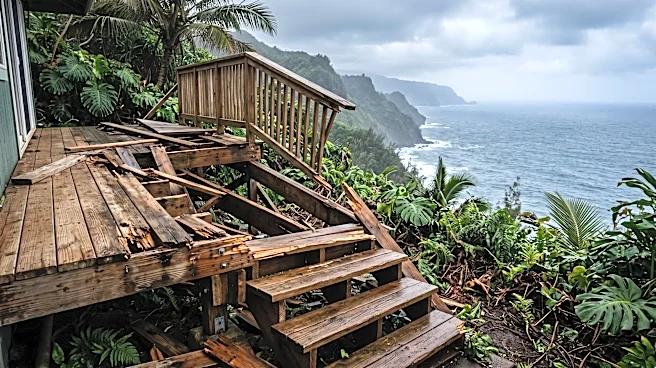
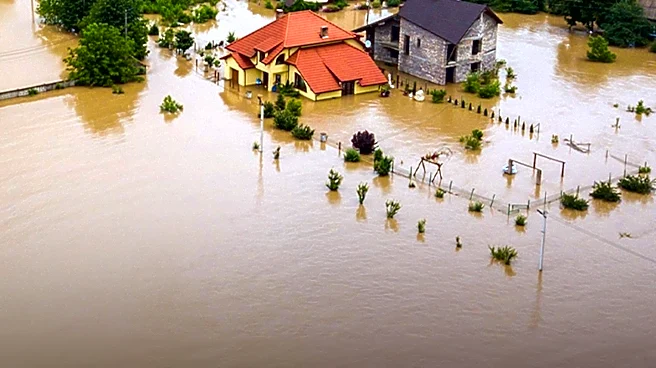
expenses like childcare and medical needs. According to estimates from the Hawaii Emergency Management Agency (HI-EMA), over 250 homes were damaged or destroyed by Lala, with Hawaii Island bearing the brunt of the storm's impact. Darryl Oliveira, Acting Administrator of the Hawaii County Civil Defense Agency, stated that more than 100 residents are still sheltering in hotels due to home damage. FEMA's denial was reportedly based on the state not demonstrating that the damage was widespread enough to meet the threshold for individual assistance, a threshold Oliveira described as unclear.
Why It's Important?
FEMA's denial of individual assistance has significant implications for hundreds of Hawaii residents still grappling with the aftermath of Hurricane Lala. Without this federal aid, affected families face immense financial burdens for housing, repairs, and other essential needs, potentially prolonging their recovery and exacerbating existing economic hardships. The lack of clarity regarding FEMA's threshold for individual assistance creates uncertainty for states and counties in their disaster preparedness and response planning. This situation highlights the critical role of federal support in disaster recovery and the challenges faced by local authorities when such aid is withheld, particularly in communities that may already have limited resources. The ongoing displacement of over 100 residents underscores the urgent need for assistance.
What's Next?
Hawaii is preparing to appeal FEMA's decision, with Acting Administrator Darryl Oliveira working with state partners to compile the necessary information within approximately three weeks. The appeal will aim to convey the significant impact of Hurricane Lala, particularly on the demographics of the affected communities, many of which are described as impoverished and resource-limited. Oliveira plans to emphasize the compounded impacts of multiple federally declared disasters in the last eight months on Hawaii Island. He also hopes to clarify the specific thresholds required for individual assistance. Concurrently, Oliveira, whose interim contract ends in mid-November, is focused on codifying policy and process for effective case management to ensure continuity in disaster response for future events.
Beyond the Headlines
This situation brings to light the broader challenges in federal disaster aid distribution and the criteria used to assess need. The discrepancy between local assessments of damage and federal thresholds can create significant friction and leave vulnerable populations without crucial support. The appeal process itself, while necessary, adds another layer of bureaucracy and delay to an already urgent situation. Furthermore, the mention of multiple recent disasters on Hawaii Island, some repetitive in their impact, points to the increasing frequency and intensity of extreme weather events, likely linked to climate change. This necessitates a re-evaluation of disaster preparedness, mitigation, and recovery strategies at both state and federal levels, ensuring that aid mechanisms are responsive to evolving environmental realities and the specific vulnerabilities of affected communities.