

What's Happening?
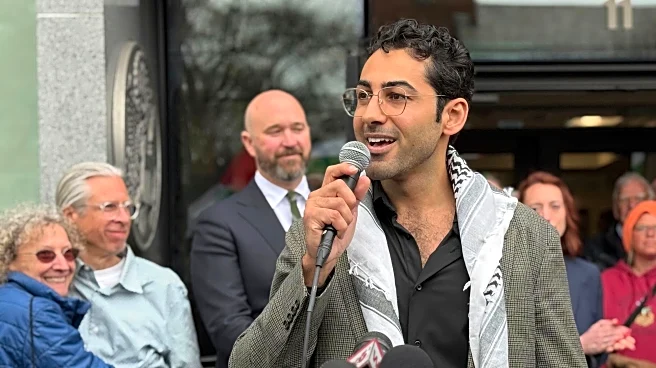
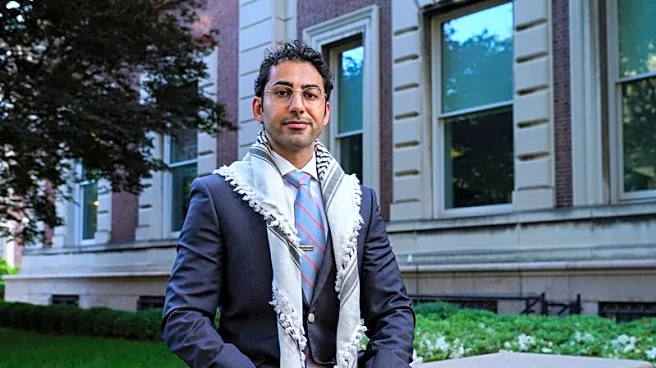
A U.S. immigration judge has blocked the deportation of Mohsen Mahdawi, a Columbia University student involved in anti-Israel protests. The decision was based on the Department of Homeland Security's failure to authenticate a document used to justify
his removal. Mahdawi, originally from the West Bank, was detained last year but released after a judge's order. The case is part of a broader pattern of the Trump administration's attempts to deport activists critical of U.S. foreign policy. The ruling follows a similar case involving a Tufts University student, highlighting ongoing legal challenges to the administration's immigration policies.
Why It's Important?
This case highlights the intersection of immigration enforcement and free speech rights, particularly for non-citizens involved in political activism. The ruling may have significant implications for how immigration cases involving political expression are adjudicated. It also reflects broader tensions between the administration's immigration policies and civil liberties, potentially influencing public opinion and policy reform efforts. The decision could serve as a precedent for future cases, affecting the legal landscape for activists and scholars in the U.S.
What's Next?
The administration may appeal the decision, which could lead to further legal battles and potentially set a precedent for similar cases. The outcome of these proceedings could impact the administration's approach to immigration enforcement, particularly regarding politically active non-citizens. Additionally, Mahdawi's ongoing legal challenges may continue to draw attention to the broader issues of immigration policy and free speech rights, potentially influencing future legislative and judicial actions.