




What's Happening?
A bipartisan group of 153 lawmakers, led by U.S. Senator Martin Heinrich (D-N.M.), U.S. Senators Alex Padilla (D-Calif.) and Adam Schiff (D-Calif.), and U.S. Representatives Jim Costa (D-Calif.) and Jared Huffman (D-Calif.), has formally urged the Department
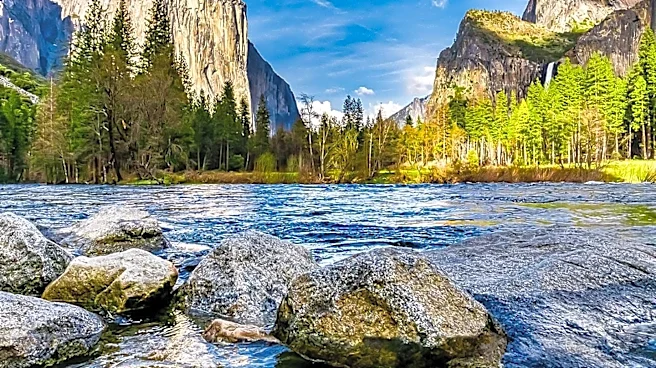
of the Interior (DOI) to abandon a proposed transfer of federally managed public land within Yosemite National Park. The proposal involves an approximately quarter-mile strip of land intended to facilitate private access to an 83-acre parcel known as Hazel Green Ranch, adjacent to the park. This ranch was acquired by Kingsbarn, a company whose chief executive officer began making donations to President Trump's campaign and the Republican National Committee shortly after the acquisition in late 2024. The lawmakers contend that this transfer appears to provide a private benefit at the expense of public land and lacks a clear, compelling public benefit. Concerns were also raised regarding the DOI's proposal to use Land and Water Conservation Fund (LWCF) authority for this exchange, despite congressional objections from the Senate Interior-Environment Appropriations Subcommittee.
Why It's Important?
This legislative push highlights a significant debate over the management and preservation of U.S. public lands, particularly national parks. The potential transfer of land within Yosemite National Park to a private entity, especially one with ties to a political donor, raises questions about transparency, ethical governance, and the integrity of public land stewardship. It underscores the tension between private economic interests and the public good, as well as the role of political influence in land use decisions. The use of LWCF authority, intended for acquiring and protecting public lands, for a transfer that appears to benefit a private developer, could set a concerning precedent for how these funds are utilized. This situation could erode public trust in government land management agencies and potentially encourage similar attempts to privatize public resources for personal gain, impacting the long-term accessibility and ecological health of national parks for all Americans.
What's Next?
The Department of the Interior, specifically Secretary Doug Burgum, is now faced with a direct appeal from a substantial bipartisan group of lawmakers to halt the proposed land transfer. The immediate next step will likely involve the DOI's response to this letter, which could either reaffirm their intent to proceed or indicate a reconsideration of the proposal. Stakeholders, including environmental groups, public land advocates, and the general public, will be closely monitoring the DOI's decision. Further congressional action, such as hearings or legislative measures to block the transfer, could be pursued if the DOI decides to move forward. The outcome of this situation could influence future policies regarding public land sales, exchanges, and the application of conservation funds, potentially leading to increased scrutiny of land transactions involving political donors or private interests.
Beyond the Headlines
The controversy surrounding the proposed Yosemite land transfer delves into deeper issues concerning the commodification of natural heritage and the potential for political influence to undermine environmental protection. The repeated attempts by the owners of Hazel Green Ranch to gain private access to Yosemite, despite federal court rulings against it in 2007 and 2012, suggest a persistent pressure to privatize aspects of national parks. This situation highlights the ongoing challenge of balancing economic development with conservation, particularly in areas of immense natural beauty and ecological significance. It also brings to light the ethical implications of campaign donations potentially influencing government decisions regarding public assets. The broader implication is a potential shift in the philosophy of public land management, moving from preservation for collective enjoyment to a model that could prioritize private access and development, thereby altering the fundamental character and accessibility of national parks for future generations.