



What's Happening?
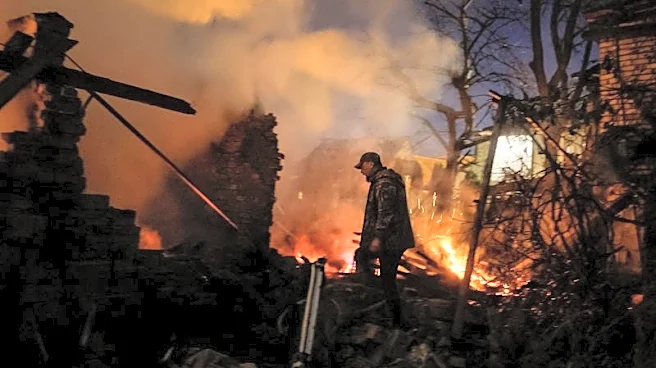
The eastern Polish city of Lublin has reactivated a Cold War-era air raid shelter, modernizing it to current civil defense standards. This move comes as Russian attacks on neighboring Ukraine intensify, raising concerns about potential spillover into
Polish territory. The shelter, located beneath the municipal bus operator MPK Lublin, was originally constructed in the mid-1980s. Its emergency exit has been reoriented to face west, symbolizing a shift in security priorities. Poland, a NATO member and former Soviet bloc state, has elevated its alert level due to several incidents involving Russian missiles and drones entering or approaching its airspace. Authorities in eastern Poland have also begun issuing warnings for residents to seek shelter during Russian attacks on western Ukraine, a practice that has become increasingly common near the border. The renovated Lublin shelter is designed to accommodate approximately 200 people for up to 72 hours, equipped with independent supplies of air, water, and electricity, according to Kamil Rzad, a civil defense inspector at MPK Lublin.
Why It's Important?
The reopening of the Cold War-era shelter in Lublin underscores the escalating security concerns in Eastern Europe and the direct impact of the conflict in Ukraine on NATO member states. This action highlights Poland's proactive measures to bolster its civil defense preparedness, reflecting a broader regional anxiety about potential Russian aggression. The shift in the shelter's emergency exit from east to west is a symbolic yet significant indicator of how geopolitical dynamics have altered threat perceptions. For the U.S. and its NATO allies, this development emphasizes the need for continued vigilance and robust collective defense strategies. The increased frequency of Russian incursions into Polish airspace, as noted by Polish Prime Minister Donald Tusk, signifies a heightened risk of accidental or intentional escalation, which could trigger NATO's Article 5 collective defense clause. This situation also places pressure on NATO to enhance its air defense capabilities and coordination along its eastern flank, ensuring the protection of allied airspace and civilian populations.
What's Next?
Polish Prime Minister Donald Tusk has stated that Russia's military campaign in Ukraine is moving increasingly close to Poland's border, necessitating frequent scrambling of Polish aircraft. The Polish government remains focused on preventing the conflict from spilling over into its territory. This ongoing threat suggests that Poland will likely continue to invest in and expand its civil defense infrastructure and preparedness efforts. Further modernization of existing shelters and the establishment of new protective facilities are probable. NATO is expected to maintain or increase its presence and surveillance activities in the region to deter further incursions and respond swiftly to any threats. The continuous Russian attacks near the border will likely prompt ongoing discussions and strategic adjustments within NATO regarding air defense protocols and rapid response mechanisms. The situation also calls for sustained international diplomatic efforts to de-escalate tensions and find a resolution to the conflict in Ukraine, thereby reducing the risk of broader regional instability.
Beyond the Headlines
The reactivation of Cold War-era infrastructure like the Lublin shelter reveals a deeper psychological and societal impact of the ongoing conflict. It signifies a return to a state of heightened alert reminiscent of past geopolitical tensions, challenging the long-held assumption of peace and stability in post-Cold War Europe. This development could lead to a broader societal shift in preparedness, with citizens becoming more accustomed to air raid warnings and civil defense drills. The uncertainty expressed by some residents about where to seek protection, despite government efforts, highlights the challenge of effectively communicating and implementing civil defense strategies across a population that has not experienced such threats for decades. Ethically, the situation raises questions about the responsibility of governments to protect their citizens from external threats, balancing security measures with maintaining a sense of normalcy. Culturally, it may foster a renewed sense of national resilience and collective defense, but also potentially increase anxiety and fear among the populace.