
What's Happening?
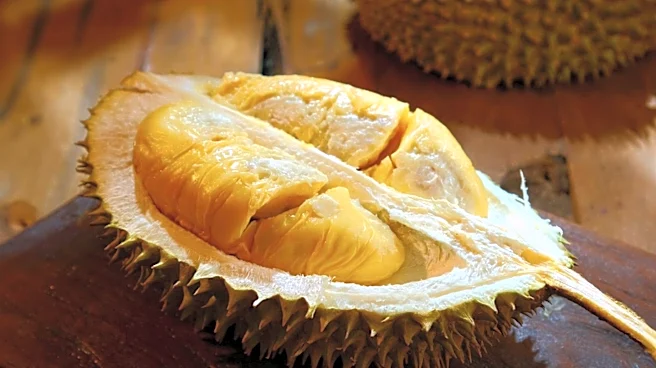
The durian fruit, often referred to as the world's most polarizing fruit, is known for its strong and divisive odor. Descriptions of its smell range from 'sewage' to 'rotting flesh,' and it has been banned
in many public places in Southeast Asia. Despite its reputation, the fruit is highly coveted in China, with imports reaching $6.99 billion annually. The fruit's unique aroma has led to a variety of reactions on social media, where people often share their experiences of tasting and smelling it. The durian is primarily grown in Thailand, Indonesia, Malaysia, and the Philippines, and is a significant part of the cultural and economic landscape in these regions.
Why It's Important?
The durian fruit's strong odor and the reactions it provokes highlight the cultural differences in food preferences and tolerances. In Southeast Asia, the fruit is a delicacy, while in other parts of the world, it is often met with disgust. This dichotomy underscores the broader theme of how cultural context shapes food acceptance. Economically, the durian is a major export product for countries like Thailand and Malaysia, contributing significantly to their agricultural sectors. The fruit's popularity in China also reflects the growing demand for exotic and luxury foods in the Chinese market, which can influence global trade patterns.