



What's Happening?
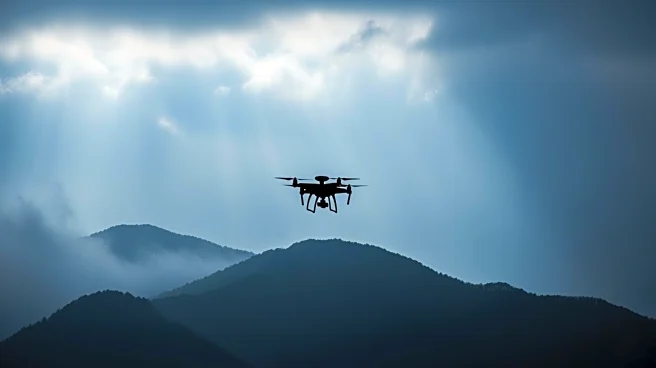
North Korea has accused South Korea of flying drones across the border, claiming these actions are provocative and violate its sovereignty. The North Korean military stated that it used electronic warfare to bring down a South Korean drone over a border town,
which was reportedly equipped with cameras. South Korea's Defense Ministry denied these accusations, stating that it did not operate drones during the specified times and does not possess the types of drones North Korea claimed were used. South Korean President Lee Jae Myung has been attempting to reopen talks with North Korea since taking office in June, but these efforts have been consistently rebuffed by the North. The situation has escalated tensions between the two countries, with North Korea warning of consequences for what it describes as South Korea's 'unpardonable hysteria.'
Why It's Important?
The accusations and subsequent denials highlight the ongoing tensions and mistrust between North and South Korea. This development could further strain relations and complicate efforts by South Korea's government to engage in dialogue and reconciliation with the North. The situation also underscores the fragile security dynamics on the Korean Peninsula, where military provocations and accusations can quickly escalate into broader conflicts. The involvement of drones, a relatively new element in military and surveillance operations, adds a layer of complexity to the geopolitical landscape, potentially influencing future military strategies and diplomatic negotiations in the region.
What's Next?
South Korea has announced an investigation to determine if civilians might have been responsible for the drone flights. Meanwhile, President Lee has sought the assistance of Chinese President Xi Jinping to mediate and ease tensions between the Koreas. The international community, particularly countries involved in the Six-Party Talks, may also be called upon to play a role in de-escalating the situation. The outcome of these investigations and diplomatic efforts will be crucial in determining the next steps and whether a path to dialogue can be reestablished.