



What's Happening?
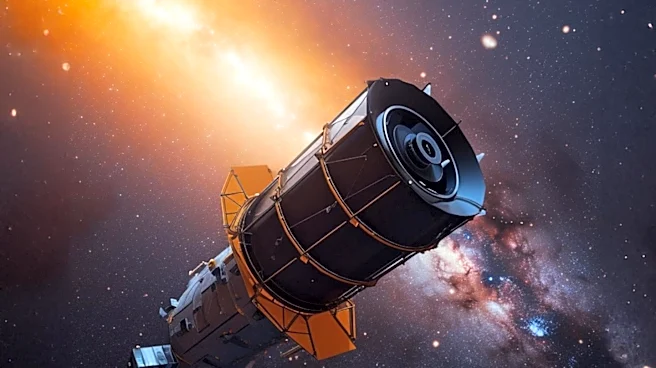
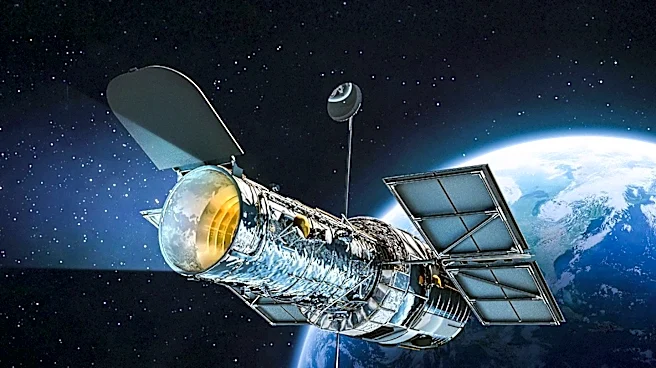
A private mission led by Katalyst Space to rescue NASA's Swift Observatory is encountering significant challenges. The LINK spacecraft, launched on July 3, 2026, to boost the orbit of the aging Swift telescope, is unexpectedly spinning, delaying the rescue mission.
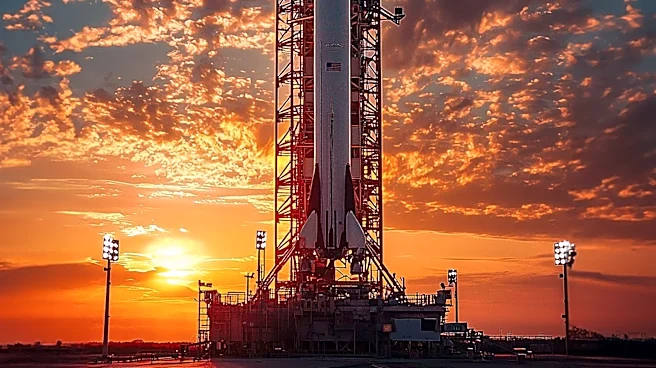
The spacecraft was launched from a Northrop Grumman Pegasus XL rocket and was intended to rendezvous with Swift by late July. However, due to electrical power issues affecting its reaction control system wheels, LINK is now spinning at four degrees per second, down from nine. Engineers are working to stabilize the spacecraft to proceed with the mission, which aims to prevent Swift from falling back to Earth this autumn.
Why It's Important?
The mission is crucial for extending the operational life of the Swift Observatory, a valuable asset for NASA in studying gamma-ray bursts and other cosmic phenomena. The observatory, initially launched in 2004, has been instrumental in detecting and analyzing short-lived astronomical events. The success of this mission could set a precedent for future low-cost, high-reward space missions that autonomously upgrade and service satellites. Failure to stabilize LINK and complete the mission could result in the loss of Swift, impacting ongoing and future astronomical research.
What's Next?
Engineers at Katalyst Space and NASA are focused on stabilizing LINK to proceed with the rescue mission. The spacecraft must rendezvous with Swift before it descends below a critical altitude, expected by autumn. If successful, the mission could extend Swift's operational life by several years, allowing it to continue its scientific contributions. The situation remains dynamic, with ongoing efforts to address the technical issues and ensure the mission's success.