



What's Happening?
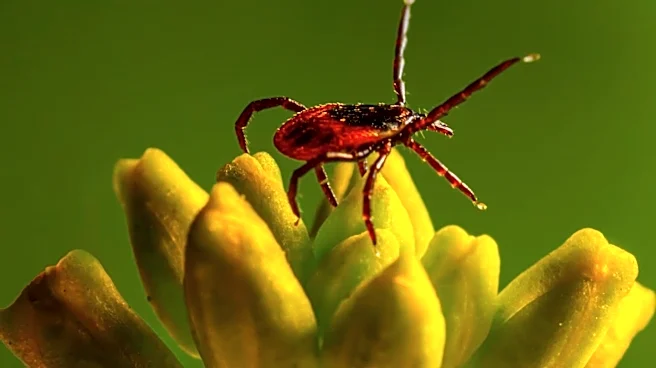
A resident in Austin, Texas, discovered a tick attached to their ankle, which was later identified as Ornithodoros turicata, a species known to carry Borrelia turicatae, the bacterium responsible for soft tick-borne relapsing fever (STRF). The Texas Department
of State Health Services and Baylor College of Medicine confirmed the tick's capability to transmit the bacteria. This case, reported in Open Forum Infectious Diseases, highlights the potential risk of STRF in urban settings, expanding the perceived threat beyond rural areas. The patient experienced symptoms such as high fever, chills, and facial paralysis, leading to multiple hospital visits before the tick was identified as the source.
Why It's Important?
The discovery of STRF in an urban environment like Austin raises significant public health concerns. It suggests that soft ticks, previously thought to be confined to rural areas, may also inhabit city parks and residential neighborhoods. This could lead to increased cases of STRF in urban populations, necessitating heightened awareness and improved diagnostic tools among healthcare providers. Early recognition of STRF can prevent misdiagnosis and ensure timely treatment, reducing the risk of severe health outcomes for affected individuals.
What's Next?
Health officials may need to implement more extensive monitoring of tick populations in urban areas to assess the prevalence of STRF. Public health campaigns could be launched to educate residents about tick prevention and the symptoms of STRF. Additionally, healthcare providers might receive updated guidelines to improve the diagnosis and management of tick-borne diseases in urban settings.