





What's Happening?
Brightly, an organization founded in 2023, is utilizing the voluntary carbon market (VCM) to provide a new funding source for U.S. nonprofit food rescue organizations. These organizations, including Food Rescue US and Feeding America, work to recover
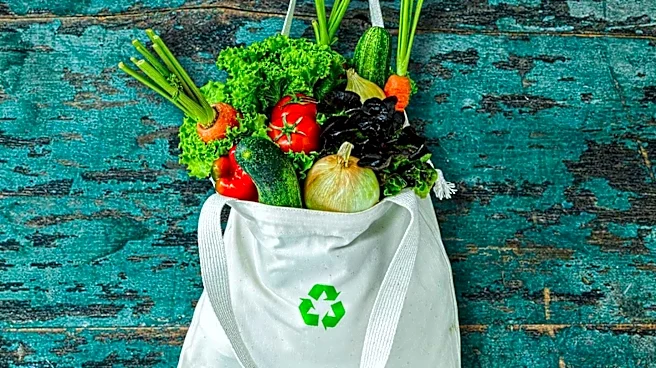
surplus food and redistribute it to those experiencing food insecurity. By preventing edible food from ending up in landfills, they also mitigate methane emissions, a potent greenhouse gas. Brightly developed the first U.S. project registered under Verra’s VM0046 Methodology for Reducing Food Loss and Waste, which quantifies greenhouse gas emission reductions from food waste prevention activities. This methodology allows the avoided methane emissions to be converted into high-integrity carbon credits, which are then sold to generate revenue. This innovative approach provides a more stable and long-term financial engine for food rescue organizations, enabling them to expand their operations, invest in infrastructure, and serve more communities across all 50 states.
Why It's Important?
Food waste is a significant dual challenge in the United States, contributing to both food insecurity and climate change. Approximately 40% of food grown in the U.S. goes to waste, while one in seven Americans faces hunger. When food decomposes in landfills, it produces methane, a greenhouse gas significantly more potent than CO2. Brightly's model addresses both issues simultaneously by creating a financial incentive for food rescue. By quantifying the climate impact of food diversion, carbon credits offer a novel and durable funding stream for organizations that traditionally rely on grants and donations. This financial stability allows them to scale their efforts, which include increasing food recovery, improving logistics, and investing in essential resources like vehicles and refrigeration. This approach not only helps reduce greenhouse gas emissions but also strengthens community resilience by ensuring more people have access to nutritious food, demonstrating a tangible local impact for carbon credit buyers.
What's Next?
Brightly's success in generating carbon credits under the VM0046 methodology is expected to pave the way for other food rescue organizations to access similar carbon finance. The model emphasizes 'additionality,' ensuring that only incremental food rescued beyond historical baselines is credited, which reinforces the integrity of the carbon credits. This focus on measurable and verifiable impact, coupled with high ratings for additionality and permanence from BeZero Carbon, is crucial for attracting buyers. As more companies seek to support verifiable climate action and local community impact, the demand for these types of carbon credits is likely to grow. The long-term goal is to create a sustainable funding model that allows food rescue organizations to significantly expand their capacity, ultimately reducing both food waste and food insecurity across the U.S. This initiative could also influence policy discussions around integrating food waste reduction into broader climate strategies and carbon market mechanisms.
Beyond the Headlines
This initiative highlights a powerful intersection between environmental sustainability and social welfare, demonstrating how market-based mechanisms like carbon credits can be leveraged to address complex societal problems. The model challenges the traditional view of carbon markets by linking emission reductions directly to tangible community benefits, such as feeding the hungry. It also underscores the often-overlooked climate impact of food systems and the potential for localized solutions to contribute to global climate goals. The emphasis on 'additionality' and rigorous verification in carbon credit generation is critical for maintaining the credibility of the voluntary carbon market and preventing accusations of greenwashing. Furthermore, this approach could inspire other sectors to explore innovative financing models that integrate environmental and social returns, fostering a more holistic approach to sustainable development. It also raises awareness about the logistical and infrastructural needs of food rescue operations, advocating for greater investment and policy support to bridge the gap between food surplus and food insecurity.