
What's Happening?
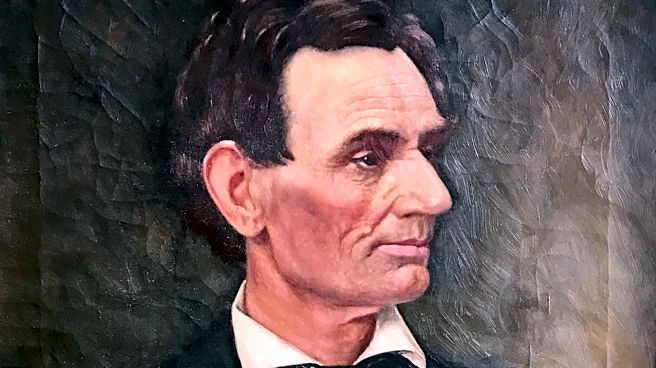
A painting of Abraham Lincoln, once displayed in the White House during Theodore Roosevelt's presidency, has been uncovered by New York collector David Soderquist. The painting, featuring a clean-shaven Lincoln, was gifted to Roosevelt in 1903 and hung
in his office until 1909. It was later sold to J.P. Morgan and eventually acquired by Soderquist's family in 1975. After extensive research, Soderquist confirmed the painting's historical significance and has loaned it to the Theodore Roosevelt Presidential Library in Medora, North Dakota. The library, set to open on July 4, will display the painting as part of its collection, allowing the public to view this piece of American history.
Why It's Important?
The discovery and public display of the Lincoln painting offer a unique glimpse into American history and the personal influences on President Theodore Roosevelt. The painting's journey from the White House to a public library underscores the importance of preserving historical artifacts and making them accessible to the public. This event highlights the role of private collectors in safeguarding cultural heritage and the potential for collaboration with public institutions to enhance public understanding of historical figures. The painting's presence in the library will provide educational opportunities and inspire visitors by connecting them with the legacy of two influential American presidents.
What's Next?
The Theodore Roosevelt Presidential Library will open its doors on July 4, featuring the Lincoln painting as a centerpiece of its collection. The library aims to engage visitors with interactive exhibits, including an AI version of Roosevelt discussing the painting's significance. The painting's future remains uncertain, as Soderquist seeks a permanent custodian who can ensure its continued public display. The library's efforts to secure the painting permanently will depend on finding a benefactor willing to purchase and donate it. This development could set a precedent for similar collaborations between private collectors and public institutions in preserving and showcasing historical artifacts.