






What's Happening?
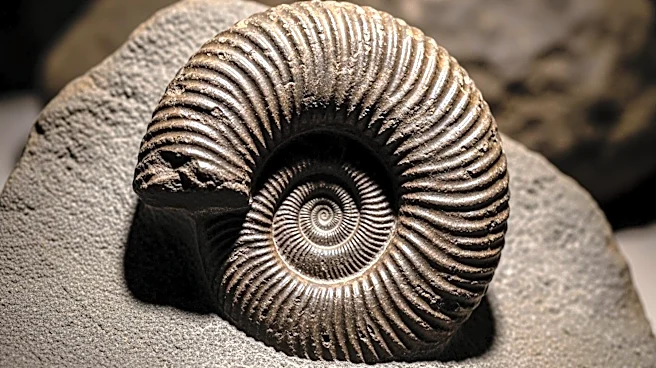
Scientists have discovered fossilized jawbones of Nanaimoteuthis haggarti, a massive, kraken-like octopus that lived approximately 72 million years ago. Found in Japan's Yezo Group and Canada's Nanaimo Group, these fossils suggest that these cephalopods
were among the largest marine creatures of the Cretaceous Period. The study, published in the journal Science, indicates that these invertebrates occupied the top of the food web, challenging previous views of Cretaceous marine ecosystems dominated by vertebrate predators.
Why It's Important?
This discovery reshapes our understanding of prehistoric marine ecosystems, highlighting the role of giant invertebrates as apex predators. It suggests a more complex and diverse ecological structure than previously thought, with implications for the study of evolutionary biology and marine paleontology. The findings also underscore the importance of fossil research in uncovering the history of life on Earth and the dynamics of ancient ecosystems.