
What's Happening?
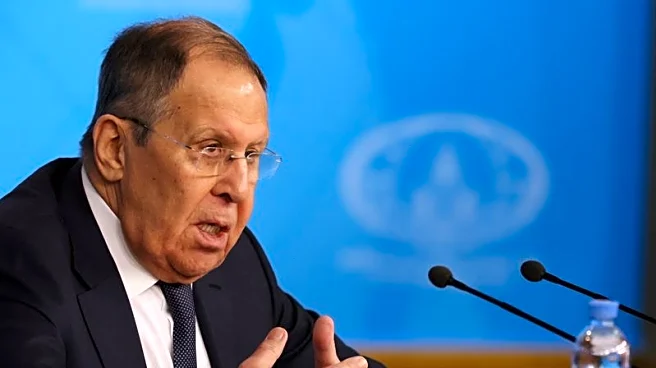
Moscow has expressed approval of President Donald Trump's recent threat to impose tariffs on NATO allies concerning Greenland. Kirill Dmitriev, a prominent Kremlin aide involved in U.S.-Russia negotiations
over the Ukraine conflict, stated that this move indicates the end of the transatlantic alliance. Dmitriev's comments suggest that Russia perceives potential benefits from the discord within NATO caused by Trump's tariff threat. Additionally, former Russian President Dmitry Medvedev, now deputy chairman of Russia's security council, mocked the situation on social media, implying that the U.S. is prioritizing Greenland over Atlantic solidarity. Medvedev's post included a satirical take on Trump's 'Make America Great Again' slogan, suggesting it could lead to negative consequences for Denmark and Europe.
Why It's Important?
The situation highlights growing tensions within NATO, a key military alliance, as President Trump's actions could strain relationships with European allies. Russia's positive reception of these developments underscores its interest in exploiting divisions within NATO, potentially weakening the alliance's collective stance against Russian actions in Ukraine. This could have significant geopolitical implications, as a fractured NATO might struggle to present a united front in international conflicts. The tariff threat also raises concerns about the U.S.'s commitment to its traditional alliances, potentially altering the balance of power in Europe and affecting global diplomatic relations.
What's Next?
The potential imposition of tariffs on NATO allies could lead to retaliatory measures from European countries, further escalating tensions. NATO members may seek diplomatic solutions to address the discord and reaffirm their commitment to the alliance. Meanwhile, Russia may continue to leverage these divisions to its advantage, possibly intensifying its efforts in Ukraine. The situation could prompt discussions within NATO about the future of the alliance and its strategic priorities, especially in light of shifting U.S. foreign policy under President Trump.