



What's Happening?
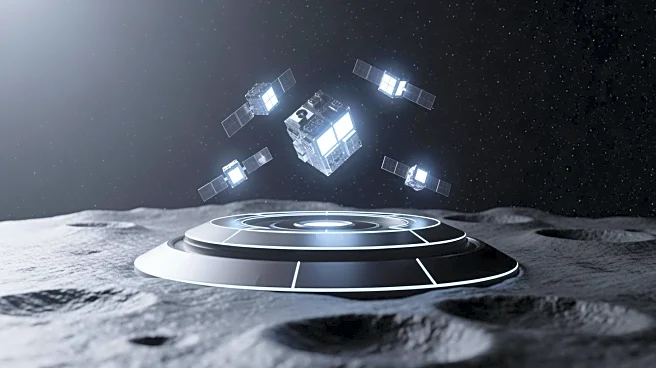
NASA's Space Launch System (SLS) rocket is set to launch the Artemis II mission to the Moon, which will include four CubeSats, or small satellites, as secondary payloads. These CubeSats will be housed within the rocket's Orion stage adapter and are provided
by countries that are signatories of the Artemis Accords. The deployment of these CubeSats is scheduled to begin approximately five hours after the launch, managed by the rocket's avionics unit. This mission marks a significant step in international collaboration in space exploration, as the CubeSats will contribute to various scientific and exploratory objectives during the mission.
Why It's Important?
The inclusion of CubeSats from international partners in the Artemis II mission underscores the collaborative nature of modern space exploration. By involving countries that are part of the Artemis Accords, NASA is fostering international cooperation and sharing the benefits of space exploration. This approach not only strengthens diplomatic ties but also enhances the scientific output of the mission by leveraging diverse technological contributions. The success of these CubeSats could pave the way for more international partnerships in future missions, potentially accelerating advancements in space technology and exploration.
What's Next?
Following the launch of Artemis II, the CubeSats will begin their deployment and operational phases, contributing to the mission's scientific goals. The data collected by these small satellites will be analyzed to support future lunar missions and may influence the design and objectives of subsequent Artemis missions. Additionally, the success of this international collaboration could lead to more countries joining the Artemis Accords, expanding the global partnership in space exploration. NASA and its partners will likely continue to explore opportunities for integrating international payloads in future missions, enhancing the scope and impact of their exploratory efforts.