




What's Happening?
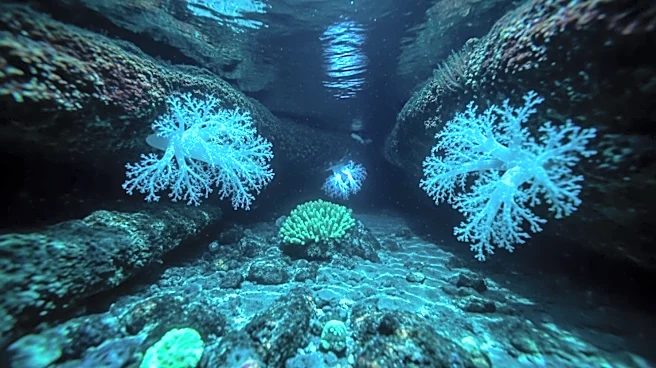
Scientists have discovered a new species of bioluminescent coral, Corallizoanthus aureus, in a deep-sea cave near Minamidaito Island, Japan. This coral emits a green light when touched, likely as a defensive mechanism. The discovery was made by the Japan Agency
for Marine-Earth Science and Technology using a remotely operated vehicle. The coral, which is attached to other organisms, was found at a depth of 385 meters. It is the first documented case of bioluminescence in a deep-sea cave ecosystem, a setting with unique environmental conditions that may have influenced the coral's evolution.
Why It's Important?
The discovery of Corallizoanthus aureus expands the known biodiversity of deep-sea environments, which are often underexplored due to their inaccessibility. The bioluminescent properties of the coral could provide insights into evolutionary adaptations in extreme environments. This finding underscores the importance of using advanced technology to explore and document marine life in challenging habitats. The study also suggests that bioluminescence should be considered in the taxonomic classification of new species, as it can serve as an ecological marker and aid in species identification.
What's Next?
Further research is needed to understand the precise biochemical pathways that enable the coral's bioluminescence and its ecological role. Scientists may continue to explore similar deep-sea environments to discover additional bioluminescent species. The findings could lead to a broader understanding of marine biodiversity and the evolutionary mechanisms that allow organisms to thrive in extreme conditions. The study highlights the potential for future discoveries in unexplored marine habitats, which could have implications for conservation and the study of marine ecosystems.