
What's Happening?
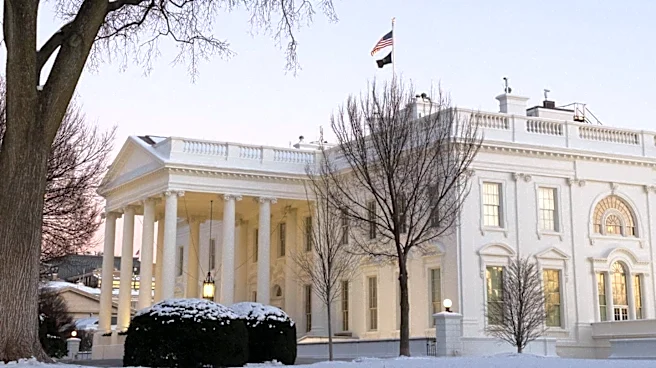
Science, Technology and Innovation Minister Blade Nzimande announced that the withdrawal of United States research funding has cost South Africa’s science and research system approximately R2.5 billion.
This significant reduction in funding has placed 1,930 research posts and 108 student degrees at risk, according to estimates from the South African Medical Research Council. Affected institutions include prominent universities such as the University of Cape Town, Wits University, and the University of Pretoria, as well as CAPRISA. A notable casualty of these cuts was an HIV vaccine trial, which lost a newly awarded five-year grant valued at $45 million. The U.S. government's decision to withdraw funding impacted various health research and clinical trial programs, particularly those focused on HIV and tuberculosis. Minister Nzimande noted that the National Institutes of Health (NIH) has indicated that some funding might be reinstated if it is determined not to fall under the definition of foreign aid.
Why It's Important?
The U.S. funding cuts highlight South Africa's vulnerability and dependence on foreign funding for its critical research programs. With about 17.3% of the country's research and development funding reliant on foreign donors, particularly in health research, these withdrawals expose a systemic weakness. The loss of R2.5 billion not only jeopardizes current research projects and academic careers but also impedes South Africa's ability to address pressing health challenges like HIV and tuberculosis. This situation underscores the need for South Africa to bolster its domestic funding for strategic research and diversify its international funding relationships to reduce over-reliance on specific partners. The incident serves as a stark reminder of how shifts in international funding policies can have profound and immediate impacts on scientific advancement and human capital development in recipient nations.
What's Next?
Minister Nzimande is expected to release the report of the Ministerial Working Group on Science, Technology and Innovation Funding for public comment, which will outline recommendations for strengthening South Africa's research funding mechanisms. The report suggests more predictable domestic funding for strategic research, protection of critical health platforms, and increased public and private spending on research and development. South Africa aims to increase its research and development spending to 1.5% of its gross domestic product, up from the current 0.62%. The government is also pursuing greater domestic scientific capacity, including vaccine development, to prepare for future health emergencies. The report also calls for stronger conditions in international research agreements covering data, intellectual property, technology transfer, local manufacturing, and skills development. The Presidency will appoint a Science, Technology and Innovation Sovereign Risk Advisory Council to implement accepted recommendations.
Beyond the Headlines
The withdrawal of U.S. funding, while creating immediate challenges, is being viewed by South African officials as an opportunity to strengthen the country's scientific sovereignty. This involves setting South Africa's own research priorities, sustaining strategic capabilities, and protecting intellectual assets, even while continuing international collaboration. The incident prompts a re-evaluation of the ethical and practical implications of relying heavily on external funding for critical national research, particularly in sensitive areas like public health. It also encourages South Africa to forge new partnerships with countries like China, alongside existing collaborations with the U.S., UK, and EU, to ensure a more resilient and diversified funding landscape. This strategic shift aims to prevent future disruptions and foster a more self-reliant and robust scientific ecosystem capable of addressing national and global challenges.