





What's Happening?
A new study published in the journal Science indicates that China's extensive solar power construction projects are contributing to a decline in bird diversity across the country. Researchers assessed policies promoting solar power and measured bird diversity in 2,344
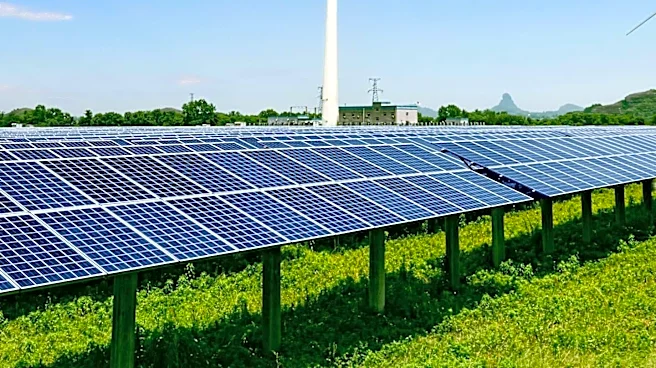
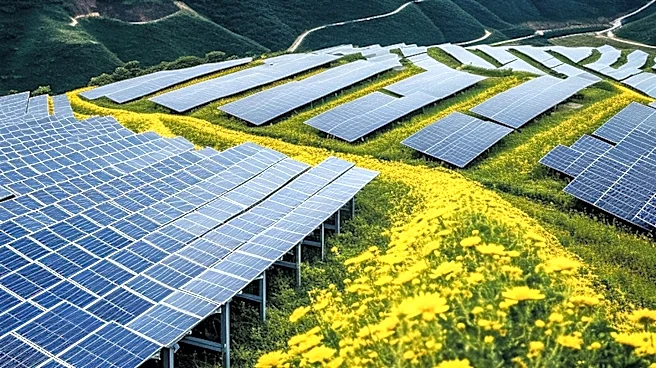
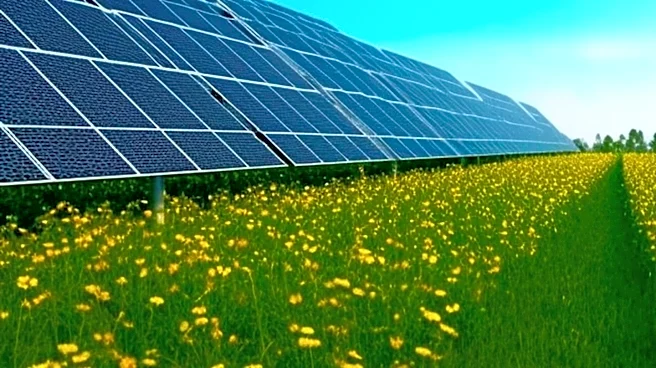
counties in China monthly from 2014 to 2023. The findings highlight the environmental impacts of large-scale solar developments, particularly in wealthier, non-arid counties and areas with high numbers of birds that nest in vegetation. The study found that while plant cover increased at solar project sites, this was often 'inferior greening,' characterized by dense but homogeneous undergrowth lacking the structural complexity and resource diversity of natural habitats. China has installed nearly as many solar panels as the rest of the world combined, making these findings particularly significant for global renewable energy strategies.
Why It's Important?
This study is important because it sheds light on the often-overlooked ecological consequences of large-scale renewable energy development. While solar power is crucial for combating climate change, its implementation can have unintended negative impacts on local ecosystems, specifically bird populations, which are key indicators of environmental health. For the U.S. and other nations pursuing aggressive renewable energy goals, these findings underscore the necessity of careful site selection and design for solar projects to minimize ecological harm. The 'inferior greening' phenomenon observed in China suggests that simply increasing vegetation cover is not sufficient; the quality and diversity of habitat must also be considered. This research provides valuable lessons for policymakers and developers globally, emphasizing the need for integrated environmental assessments that go beyond carbon emissions to include biodiversity impacts when planning renewable energy infrastructure.
What's Next?
The study's authors suggest that future policies in China, and by extension, other countries, should prioritize careful site selection for large solar projects, steering them away from ecologically sensitive areas. They also recommend using rooftop solar in habitat-rich regions and restoring diverse native vegetation instead of relying on simple greening targets. Current Chinese policies, such as the Biodiversity Conservation Strategy and Action Plan for 2023 to 2030, already emphasize ecological protection, offering a framework for better coordination between solar development and biodiversity conservation. The findings will likely prompt further research into best practices for sustainable solar development, encouraging a more holistic approach that balances renewable energy expansion with ecological preservation. This could lead to the development of new guidelines and regulations for solar farm construction globally.
Beyond the Headlines
The study's implications extend beyond immediate policy adjustments, prompting a deeper ethical and environmental discussion about the trade-offs inherent in the transition to clean energy. While renewable energy sources like solar are vital for mitigating climate change, this research highlights that even 'green' technologies can have significant environmental footprints if not implemented thoughtfully. It challenges the simplistic view that all renewable energy is inherently benign and underscores the complexity of achieving true sustainability. The findings also emphasize the importance of citizen science data in environmental monitoring and research. Ultimately, this study serves as a critical reminder that addressing climate change requires not only technological innovation but also a profound understanding and respect for ecological systems, ensuring that solutions to one environmental problem do not inadvertently create others.