






What's Happening?
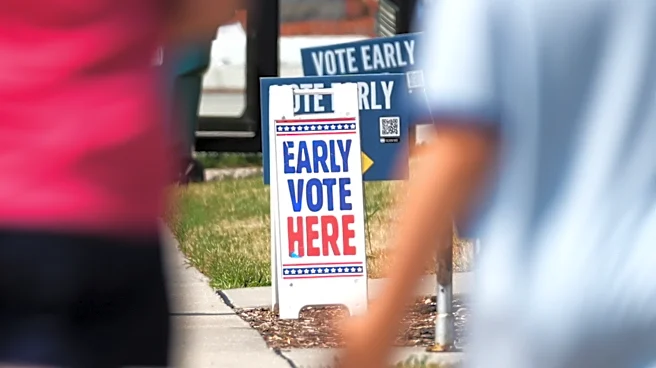
Tarrant County commissioners have postponed a decision on reducing the number of polling sites for the upcoming November midterm elections. The proposal, put forth by the county elections administrator Clint Ludwig, suggested cutting Election Day polling sites by 45%
from 316 to 176, and early voting sites from 50 to 42. The decision to delay came after significant public opposition during a meeting where many attendees argued that the reduction would hinder voter access, especially given the county's population growth since the last midterms. The meeting was marked by tension, including the arrest of former Democratic state representative Lon Burnam, who protested the proposed cuts. The commissioners, led by Republican County Judge Tim O’Hare, decided to revisit the issue on September 1, citing the need for more input and consideration.
Why It's Important?
The decision to delay the vote on polling site reductions is significant as it highlights ongoing debates about voter accessibility and election integrity. Reducing polling sites could potentially disenfranchise voters, particularly in growing areas, and has sparked accusations of voter suppression. The controversy underscores the broader national conversation about voting rights and access, especially in politically contentious regions. The outcome of this decision could impact voter turnout and the results of the November elections, which include key local and state positions. The situation also reflects the challenges election officials face in balancing logistical considerations with ensuring broad voter access.
What's Next?
The Tarrant County Commissioners will reconvene on September 1 to further discuss the proposed polling site reductions. In the interim, voting rights advocates and local activists are expected to continue their efforts to influence the decision, potentially through public demonstrations or legal action. The commissioners may face increased pressure to maintain or even expand the number of polling sites to accommodate voter needs. The outcome of this decision could set a precedent for other counties facing similar issues, influencing how election logistics are managed in the future.