
What's Happening?
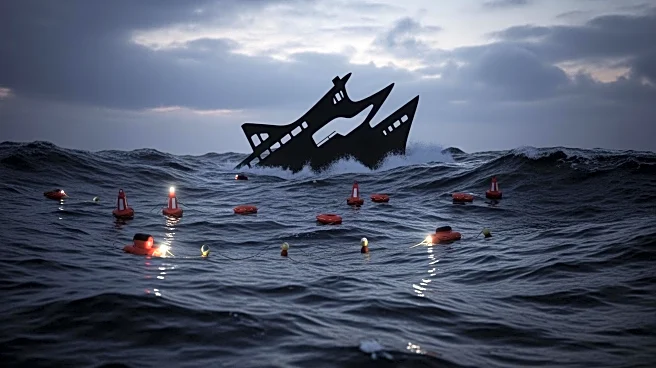
A ferry carrying over 350 passengers sank near an island in the southern Philippines, resulting in at least 18 confirmed deaths. The incident occurred after the vessel, identified as M/V Trisha Kerstin
3, encountered technical difficulties and began taking on water. The ferry was traveling from Zamboanga to Jolo island in Sulu province when it sank approximately one nautical mile from Baluk-baluk in Basilan province. Rescue operations are underway, with coast guard and naval ships, along with a surveillance plane and an air force helicopter, actively searching for survivors. So far, 316 passengers and crew members have been rescued, while efforts continue to locate the remaining missing individuals.
Why It's Important?
This tragic event highlights the ongoing challenges faced by maritime transportation in the Philippines, a nation composed of numerous islands where sea travel is a common mode of transportation. The incident underscores the critical need for stringent safety regulations and maintenance protocols to prevent such disasters. The loss of life and the emotional toll on survivors and their families emphasize the human cost of maritime accidents. Additionally, the incident may prompt a review of safety measures and regulations governing passenger ferries in the region, potentially leading to policy changes aimed at enhancing maritime safety.
What's Next?
An investigation into the cause of the ferry's sinking is expected to be conducted by the Philippine coast guard. This inquiry will likely focus on the technical issues that led to the vessel's failure and assess whether safety protocols were adequately followed. The findings could influence future regulatory measures and safety standards for passenger ferries. In the immediate aftermath, rescue operations will continue as authorities strive to account for all passengers and crew members. The incident may also lead to increased scrutiny of ferry operations and safety compliance across the archipelago.