






What's Happening?
Researchers have identified a vast freshwater reservoir beneath Utah's Great Salt Lake, reaching depths of up to 2.5 miles. This discovery, led by a team from the University of Utah, was made using an airborne electromagnetic survey that detected differences
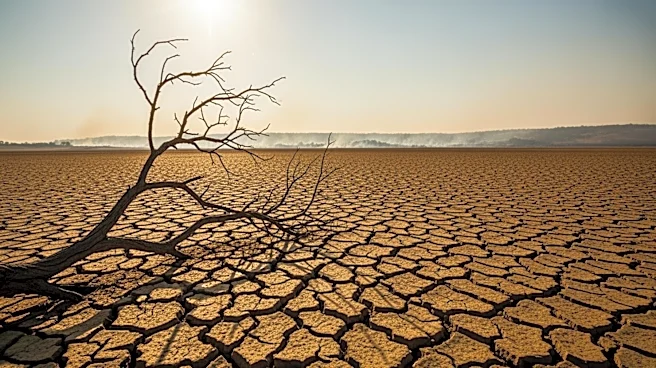
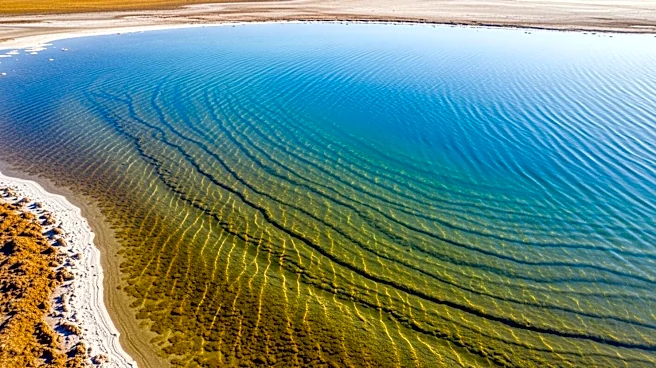
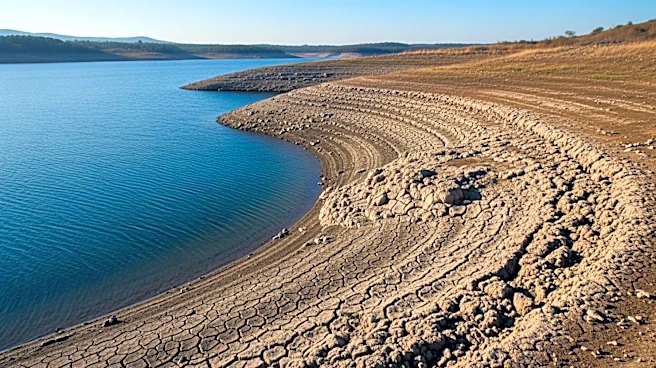
in electrical conductivity between saltwater and freshwater. The reservoir is believed to have formed from snowmelt seeping into the ground over thousands or millions of years, trapped by impermeable rock layers. This finding comes as the Great Salt Lake continues to shrink, raising concerns about exposed dry lakebeds and the potential release of toxic dust into the air.
Why It's Important?
The discovery of this freshwater reservoir is significant as it could provide a new resource to address environmental challenges posed by the shrinking Great Salt Lake. The lake's reduction has exposed dry areas that can release harmful dust, affecting air quality in nearby communities such as Salt Lake City. If the freshwater reservoir extends widely, it could help keep these areas moist, reducing dust spread. Additionally, there is potential for the water to be used in irrigation, although further research is needed to assess the feasibility and environmental impact of such use.
What's Next?
Further studies are required to determine the full extent of the freshwater reservoir and its potential applications. Researchers are particularly interested in understanding how this resource can be used to mitigate dust emissions without disrupting the freshwater system. The findings could lead to new strategies for managing the environmental impact of the shrinking lake, but careful consideration of the ecological balance is necessary before any extraction or usage plans are implemented.