







What's Happening?
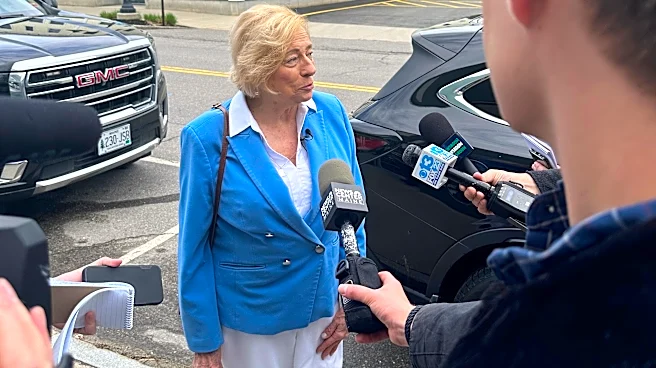
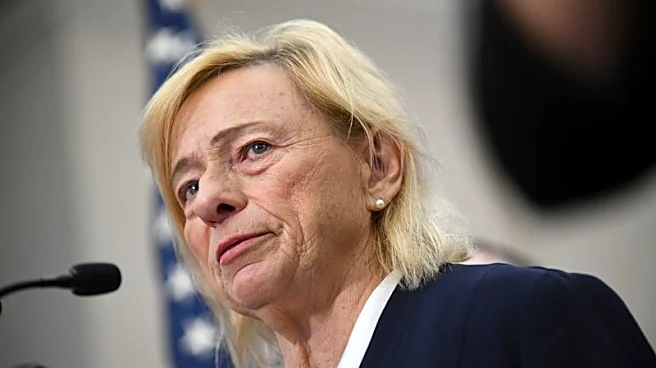
Maine Governor Janet Mills has announced the suspension of her campaign for the U.S. Senate, effectively paving the way for Graham Platner to secure the Democratic nomination. Mills cited a lack of financial resources as the primary reason for her withdrawal,
despite her commitment and experience. Her decision comes as Democrats target Maine in the 2026 midterm elections, aiming to unseat incumbent Republican Senator Susan Collins. Mills, who was recruited by Senate Majority Leader Chuck Schumer, was seen as a strong contender due to her statewide electoral success. However, her age and financial constraints posed challenges. Platner, a 41-year-old political newcomer and oyster farmer, has gained significant momentum, leading Mills by 27 points in a recent Emerson College poll and raising $4 million in early 2026.
Why It's Important?
The suspension of Mills' campaign is significant as it reshapes the Democratic strategy in Maine, a key battleground state. With Mills out, Platner becomes the presumptive nominee, shifting the focus to his campaign against Senator Collins. This development underscores the financial pressures in modern political campaigns and highlights the strategic calculations within the Democratic Party. The race is crucial for Democrats aiming to challenge Republican influence, particularly in states won by former Vice President Kamala Harris in 2024. Platner's candidacy, despite controversies, represents a fresh face in politics, potentially appealing to younger voters and those seeking change.
What's Next?
With Mills stepping aside, the Democratic Party will likely consolidate its support behind Platner, focusing on unifying efforts to defeat Collins. The campaign will need to address Platner's past controversies, including his online comments and a tattoo incident, to maintain voter confidence. As the election approaches, both parties will intensify their efforts, with Democrats aiming to capitalize on Collins' perceived vulnerabilities and Republicans defending a critical seat. The outcome of this race could influence the balance of power in the Senate, impacting legislative priorities and the broader political landscape.