





What's Happening?
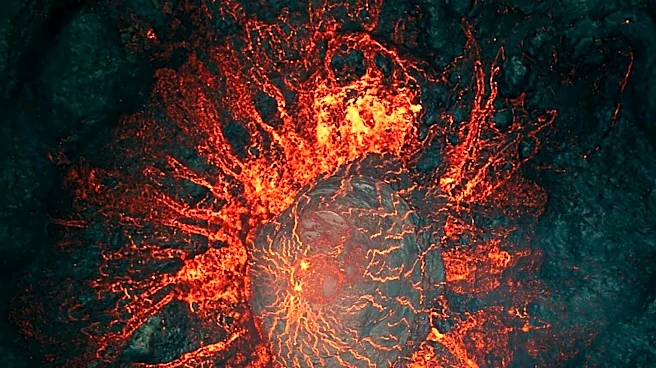
A new study led by Alice Paine from the University of Basel has identified volcanic eruptions as the likely cause of abrupt cold periods during the Holocene epoch. The research team analyzed records of 51 major eruptions, many of which occurred along
the Pacific Ring of Fire, and found a strong correlation between these eruptions and periods of global cooling. The study suggests that sulfur particles from volcanic eruptions reflect sunlight away from the Earth, initiating a cooling effect that can last for centuries. This cooling effect is further amplified by changes in ocean currents and the expansion of Arctic sea ice.
Why It's Important?
The findings provide a clearer understanding of the natural factors that have historically influenced Earth's climate. By identifying volcanic eruptions as a key driver of past climate changes, the study offers insights into the potential impacts of future volcanic activity. This research is significant for climate scientists as it helps to refine models of climate behavior and improve predictions of future climate scenarios. Understanding these natural processes is crucial in the context of current climate change, as it allows scientists to distinguish between natural and anthropogenic influences on the climate.
Beyond the Headlines
The study raises questions about the potential for future volcanic eruptions to impact the current climate, which is already affected by human activities. While some researchers believe that a volcanic eruption could exacerbate existing climate stresses, others argue that the scale of human-induced changes may overshadow the effects of a single eruption. This ongoing debate highlights the complexity of climate systems and the need for continued research to fill knowledge gaps. The study also underscores the importance of monitoring volcanic activity and preparing for potential climate impacts.