




What's Happening?
The United Nations is reporting that Israeli restrictions on movement and access within the Gaza Strip are significantly hindering humanitarian relief and flood protection efforts. According to Stéphane Dujarric, spokesman for the UN Secretary-General,
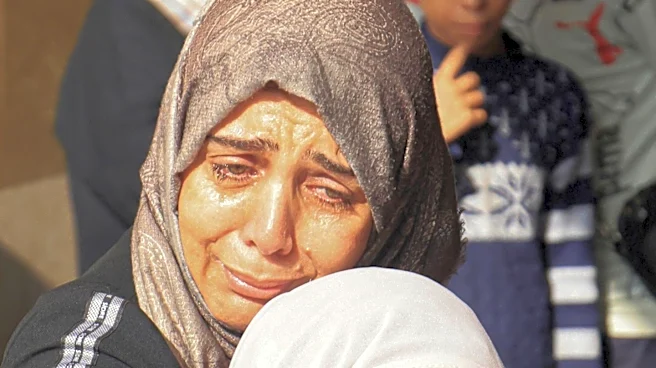
these restrictions affect nearly two-thirds of Gaza's land, leaving the remaining 35 percent severely overcrowded with displaced Palestinians. This concentration of people, coupled with the approaching winter and seasonal rains, is creating an acute logistical and humanitarian crisis. UN humanitarian teams and partner organizations are assessing emergency measures to protect displaced families from potential winter flooding, including evaluating over 450 existing displacement camps at high risk. They are also inspecting potential relocation zones for temporary shelters, particularly for those in makeshift encampments near unstable building ruins. The UN emphasizes the urgent need for Israel to lift restrictions on critical supplies like heavy machinery, spare parts, and fuel, which are essential for preparing sites and infrastructure for winter conditions. Additionally, medical shortages are further complicating efforts to provide healthcare, especially for vulnerable groups like cancer patients.
Why It's Important?
The ongoing restrictions on humanitarian access in Gaza have profound implications for the well-being of hundreds of thousands of displaced Palestinians. With 65 percent of Gaza's land restricted, the remaining areas are experiencing severe overcrowding, exacerbating an already dire humanitarian situation. The inability to bring in essential supplies and equipment for flood protection and shelter construction means that displaced families face heightened risks from winter weather, including exposure, disease, and structural collapse of temporary shelters. This situation not only threatens lives but also undermines the stability and recovery of the region. The lack of adequate medical supplies further strains an already fragile healthcare system, impacting the most vulnerable populations. The UN's warnings highlight a critical need for international attention and action to ensure that humanitarian aid can reach those in need, preventing a further deterioration of the crisis and mitigating the long-term consequences of displacement and lack of basic services.
What's Next?
The immediate next steps involve continued efforts by UN humanitarian agencies and partners to assess and implement emergency measures for flood protection and shelter, despite the existing access restrictions. This includes ongoing evaluations of high-risk displacement camps and potential relocation sites. The UN will likely continue to advocate for the lifting of Israeli restrictions on critical supplies and movement within Gaza to facilitate these efforts. International diplomatic pressure may increase to ensure safe, timely, and unrestricted humanitarian access. Aid agencies will also require additional funding to procure emergency fuel and durable construction materials. The situation is expected to worsen as winter approaches, making the need for immediate action more pressing. The long-term outlook depends on the resolution of these access issues and sustained international support to address the humanitarian crisis and rebuild damaged infrastructure.
Beyond the Headlines
Beyond the immediate humanitarian concerns, the restrictions on access in Gaza raise deeper questions about international humanitarian law and the responsibilities of occupying powers. The UN's repeated warnings underscore the ethical imperative to protect civilian populations during conflict and ensure their access to basic necessities and safety. The mass concentration of displaced people into a small area, coupled with the inability to adequately prepare for natural elements like winter rains, highlights the systemic challenges in providing humanitarian assistance in conflict zones. This situation could lead to long-term health crises, increased displacement, and further destabilization of the region. The ongoing struggle to deliver aid also points to the broader geopolitical complexities and the need for sustained diplomatic efforts to achieve lasting peace and ensure the protection of human rights in the region.