




What's Happening?
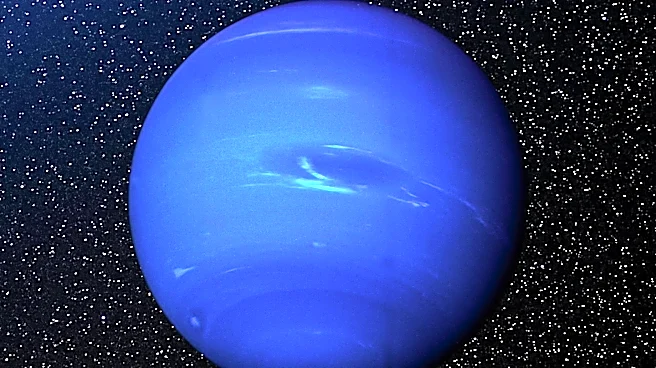
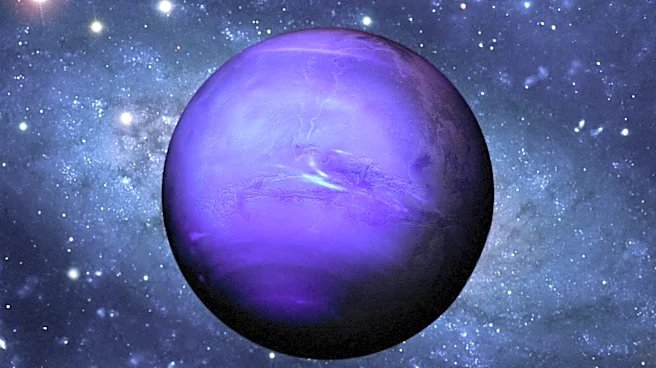
Recent exoplanet surveys have identified a class of planets known as sub-Neptunes, which are larger than Earth but smaller than Neptune. These planets are prevalent in the Milky Way, yet absent from our solar system, presenting a challenge for astronomers.
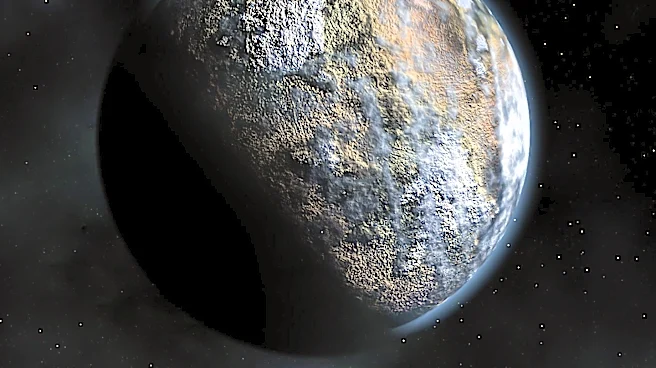
Sub-Neptunes are characterized by their size and mass, but their compositions remain largely unknown. They could be rocky cores with thin hydrogen envelopes, water-rich worlds, or mini-Neptunes with deep atmospheres. The lack of nearby examples in our solar system complicates direct study, making it difficult to determine their exact nature. Observations from missions like Kepler have shown that these planets are common, but their atmospheres often resist interpretation due to factors like clouds or haze.
Why It's Important?
The discovery of sub-Neptunes challenges traditional planetary classification systems based on our solar system. Their prevalence suggests that the solar system is unusual for lacking such planets, which could provide insights into planetary formation processes. Understanding sub-Neptunes is crucial for refining models of planet formation and evolution. These planets may hold clues about atmospheric composition and dynamics, which are essential for understanding the potential habitability of exoplanets. The study of sub-Neptunes could also inform the search for life beyond Earth by highlighting the diversity of planetary environments.
What's Next?
Future observations, particularly with advanced telescopes like the James Webb Space Telescope, are expected to provide more detailed atmospheric data on sub-Neptunes. This could help resolve questions about their composition and formation. Continued population studies will test how factors like stellar radiation and planet mass influence the development of these planets. As technology advances, astronomers hope to better understand the divide between rocky super-Earths and gas-wrapped sub-Neptunes, potentially leading to new insights into planetary science.